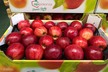
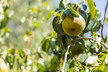
The new season of Hebei pears from China arrived on the market in July. Huangguan pears have already entered cold storage, while Ya pears have just entered the market and will begin moving into warehouses in September.
"This year is a promising one for pear importers and exporters," said Mr. Gavin Bian, Chairman of Hebei Tianbo Fruit. "The high quality and competitive prices of the new pears, combined with limited inventory, make this season's fruit particularly attractive in the market, especially for export."
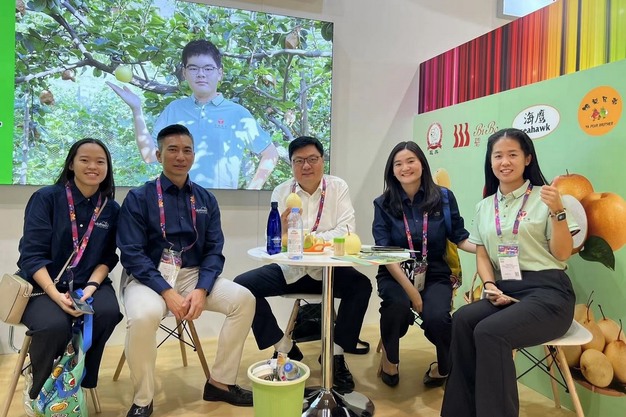
Tianbo Fruit team with Indonesian fruit importers
"In terms of production, several major varieties have declined compared with last year due to weather and other factors. Huangguan and Ya pears are down about 10%, while Xuehua pears from Hebei have dropped roughly 30%. By contrast, Qiuyue pears are expected to see a strong harvest." Gavin added that cooler temperatures during flowering have resulted in smaller fruit this season, with some showing a tiger-skin-like peel. While this has reduced the proportion of marketable fruit, taste and eating quality remain unaffected.
"Prices this season are also lower, providing a boost to sales. Early, mid-, and late-season fruit prices have fallen by approximately 20%, 30%, and 40% respectively. As a result, current inventory is about 20% lower than last year."
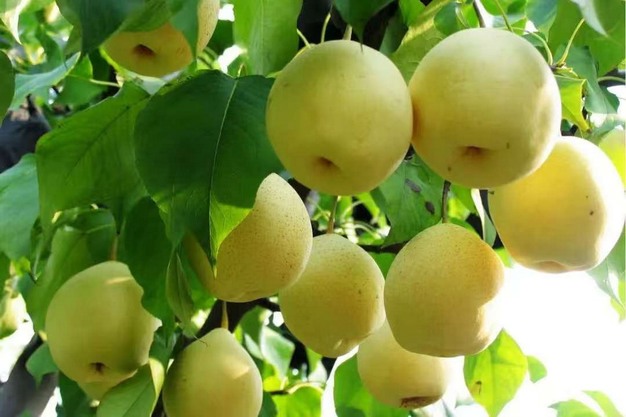
On the export side, this season's pears enjoy strong advantages in quality and price, making them highly competitive internationally. "However, challenges remain in the Indonesian market. Since Indonesia has not yet completed the registration and approval process for Chinese-authorized testing laboratories, the country only recognizes Certificates of Analysis (COA) issued before the end of June and between mid-July and mid-August. Pears with COAs issued between mid-July and mid-August must undergo additional pesticide residue testing upon arrival, delaying customs clearance and increasing costs for testing and containers, which hindered Chinese pear exports to Indonesia. As Indonesia accounts for a significant share of pear exports, shipments to the market fell about 30% year-on-year in July and August.
According to the latest news, on August 25, the Indonesian Quarantine Agency confirmed that the laboratory approval process has been completed, and the facility has resumed issuing COAs. As a result, from September onward, shipments accompanied by certificates from the newly approved laboratory will no longer require secondary inspection upon arrival. "Once the approval process is completed and exports return to normal, pent-up demand combined with the advantages of this season's fruit should drive a quick recovery," Gavin explained.
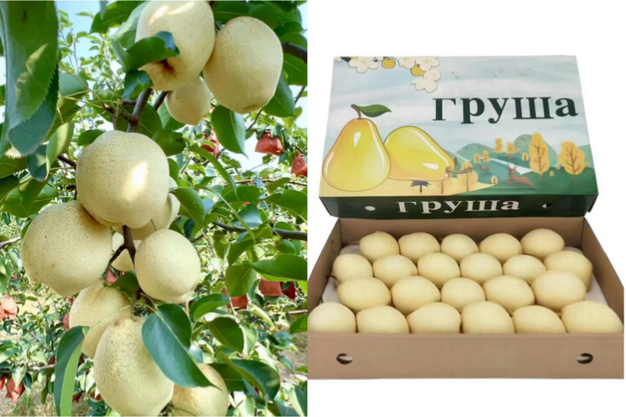
Elsewhere, demand has picked up strongly in Russia and Central Asia. "The Russian market favors Ya and Hongxiangsu pears, while Central Asia prefers Ya and Huangguan pears. Inquiries for Ya pears are particularly active at the moment, and shipments have already begun," Gavin noted.
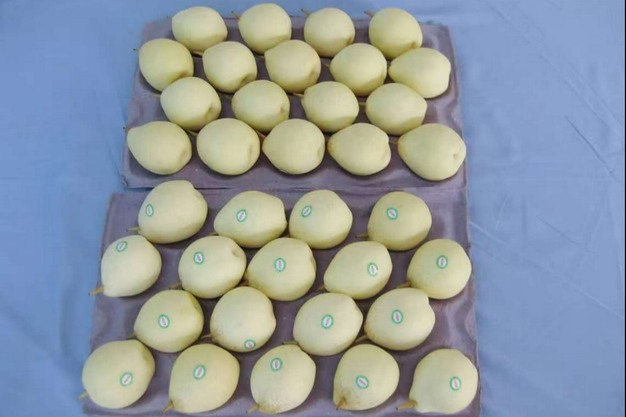
Hebei Tianbo Fruit specializes in Huangguan, Ya, Hongxiangsu, Yuluxiang, and Fengshui pears, with exports to Indonesia, Malaysia, the Philippines, Thailand, Singapore, Russia, the United States, Canada, Mexico, and South Africa.
Hebei Tianbo Fruit will also participate in Asia Fruit Logistica in Hong Kong from September 3–5, at booth 5T36, and welcomes industry colleagues to visit and exchange insights.