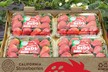
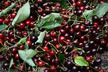
The marketing of Greek sweet cherries got off to a late start this year, with a delay of around two weeks. "The first deliveries did not arrive until May 10, due to late frost in the northern Greek growing region of Pella. Although we started the season with significantly higher prices than last year, sales were satisfactory in the first two weeks. This was probably also due to the generally manageable supply volumes, as Italy and Turkey also suffered weather damage," explains Theo Hatzivassiliadis, managing director of Hans Kuffer GmbH and specialist importer of Greek produce at the local Munich wholesale market.
At the beginning of calendar week 22, the market situation had completely reversed: "Availability expanded noticeably. Nevertheless, sales are extremely difficult currently, so prices are already being adjusted downward," said Hatzivassiliadis. The price differences between the respective countries of origin, whether Greece, Spain, or Italy, are currently negligible.
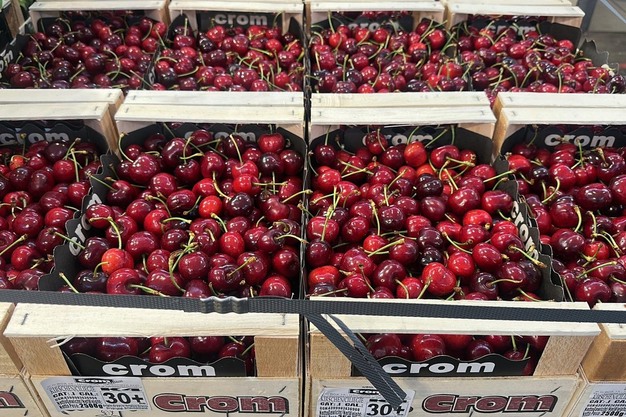
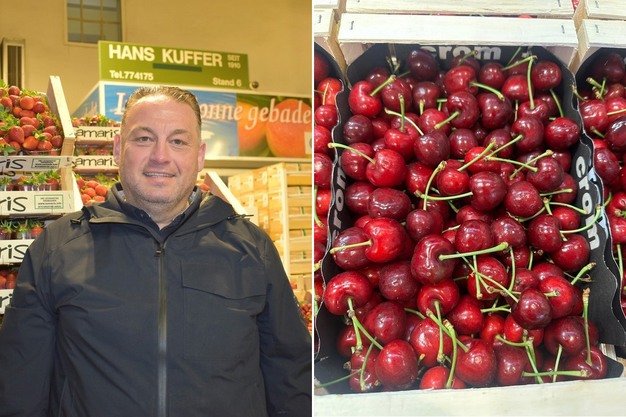 © Hans Kuffer GmbHDespite the wide range of varieties available, Greek cherries are primarily marketed in Germany as 'Pella cherries'. However, Hans Kuffer GmbH only sells cherries sorted by variety.
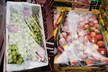
Despite the cold weather, Greek hard cherries are available in all desired sizes, the importer continues. In food retail, size 26+ is primarily required, while large-sized 30/32+ fruit dominates the free market. Sweet cherries of Greek origin are normally available until the end of July.
 © Hans Kuffer GmbH
Serious losses for stone fruit
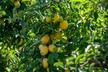
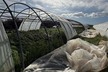
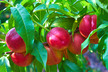
The Greek stone fruit season is also currently in the starting blocks. Hatzivassiliadis: "Similar to cherries, we are also starting the season around two weeks later. We expect the first apricots and peaches to arrive in the course of calendar week 23. Due to severe frost damage, there will be very few apricots in the main growing region of Pella. Even though the second-largest growing region will have a fairly good harvest, we will unfortunately not be able to make up for these losses by a long shot." The Greece specialist does not yet have any concrete information regarding the availability of peaches and nectarines. 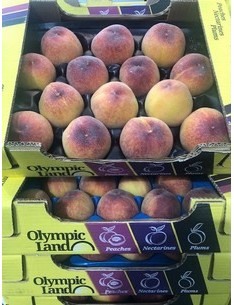 © Hans Kuffer GmbH
Right: Greek apricots are usually available until mid-August, while nectarines and peaches are traded until the end of August/beginning of September.
Stability characterizes the Greek stone fruit sector
In general, stone fruit cultivation in Greece has been stable for several years. "Years ago, it was said that peaches would lose market share to nectarines. Interestingly, we are achieving better sales results with peaches than with nectarines. This trend has been emerging for two to three years now and is also leading to a slight increase in peach cultivation. However, I do not see any fundamental structural change in Pella, as is the case in Kavala, where kiwi cultivation is now being massively expanded at the expense of asparagus production," he concludes.
For more information:
Theo Hatzivassiliadis
HANS KUFFER Fruchthandel GmbH
Munich wholesale market hall
Mobile: 0162/2923477
[email protected]
www.kuffer24.de