The U.S. agriculture industry relies on exports to survive as the country produces far more fruits, vegetables, and commodities than its population can consume. "To avoid waste and devastating financial losses, about 20 to 40 percent of agricultural production must be exported," says Dalton Dovolis with IPG. "Without robust international trade and open market access, growers will face intense pressure to drastically lower prices, significantly impacting their financial stability and long-term viability," he added. "President Trump, as someone who supports American farmers and champions fair trade, I urge you to consider a critical point during your ongoing tariff negotiations."
Prioritize removing tariffs on U.S. ag exports
To protect U.S. agriculture, it is important to strengthen the U.S.' position as a leading export nation once again. "I would like to ask President Trump to prioritize eliminating tariffs on U.S. ag exports during his trade negotiations," Dovolis said. Currently, U.S. agriculture exports face tariffs going into many countries around the world, especially Asia. "These tariffs weaken our competitiveness, pushing foreign buyers toward cheaper Chinese agricultural products. In order to protect U.S. farmers and restore our country's export power, this should be a major priority during negotiations."
Currently, tariffs on products like grapes, citrus, apples, cherries, and stone fruit commonly range from 10 percent to 40 percent. In China's case, these tariffs are significantly higher, severely damaging U.S. competitiveness and farmer incomes. Aggressively advocating tariff elimination for U.S. agricultural products will ensure fair global market access for American farmers. "Without this crucial market access, American farmers will be forced to rely too heavily on the domestic market, which cannot sustainably absorb increased volumes without drastically reducing returns," Dovolis commented. Eventually, this scenario would compel growers to remove crops such as grapes and citrus from production, inadvertently enhancing China's dominance in global agriculture.
 © IPG
© IPG
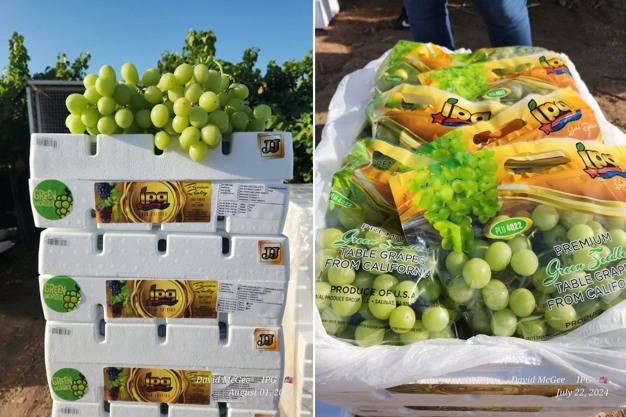
Freshly harvested California grapes. Premium quality at origin, before the challenges of extended ocean transit.
Avoid seasonal import tariffs
Simultaneously, Dovolis feels it's essential to avoid imposing tariffs on seasonal imports—such as citrus from Chile and Peru during summer or grapes from these countries in winter—when the U.S. lacks domestic production. "Agriculture by nature is seasonal, and imported produce plays a critical role in supplying American consumers year-round. These imported products do not directly compete with American growers; rather, they complement our domestic calendar by filling necessary seasonal supply gaps."
"Imposing tariffs on these seasonal imports would unnecessarily raise costs for American families, restaurants, and retailers. It would also disrupt long-standing trade partnerships that are crucial for maintaining market access for American growers when our produce is in season. Maintaining tariff-free seasonal imports not only protects consumer affordability but also preserves critical international relationships that ensure our own exports find welcoming markets abroad."
Offset rising labor costs and wages
American farmers face continuously rising labor costs and wages—costs many global competitors do not bear. In states like California, stringent labor laws and mandated minimum wage increases are significantly outpacing the market prices growers can command for their produce. "While we proudly support fair wages and worker protections, these additional costs put immense financial pressure on growers, diminishing their competitiveness on the global stage." Meanwhile, governments in countries like China subsidize agricultural production heavily, enabling their growers to sell products at artificially low prices. "Lowering export tariffs, negotiating better trade agreements, and providing targeted support for American agriculture are essential to offset these growing labor expenses and maintain our global competitiveness."
 © IPG
© IPG
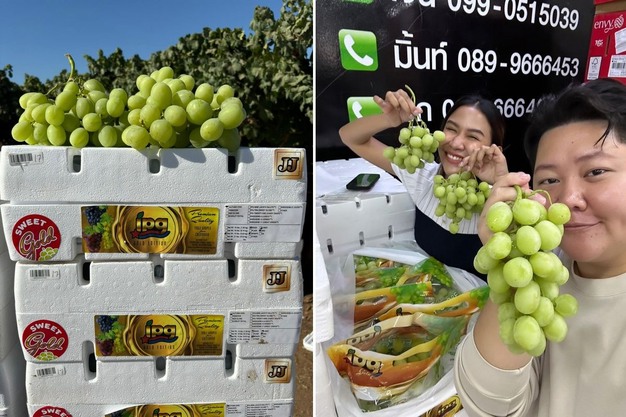
A happy customer in Thailand is showing off fresh air arrival California grapes.
Reviving U.S.-Asia ocean freight
"To truly restore America's position as a leading agricultural exporter, we must also revitalize American shipping infrastructure," Dovolis shared. Today, nearly all vessels transporting U.S. fruit overseas are foreign owned, often by Chinese companies. "To regain our global leadership, we must build a U.S.-flagged fleet, owned and operated domestically, with American-made ships. Faster vessels, better cold-chain control, and strengthened national security are critical for America's future as a powerhouse exporter. Another critical aspect President Trump could address in trade negotiations is encouraging foreign shipping carriers—especially from countries that dominate global shipping such as Korea, China, and various European nations—to prioritize and accelerate transit times specifically for American agricultural exports. This would significantly enhance our competitiveness and ensure the quality of our produce upon arrival."
Recent shipping delays—from previously reliable 14–18 days now stretching to 25–60 days—have devastated produce quality, pushing Asian buyers toward fresher Chinese grapes delivered within 1–2 days by truck, or fresher Egyptian citrus arriving within 14 days. Without restoring transit efficiency, American farmers risk permanently losing vital markets. Factors such as carrier consolidation, slow steaming practices, port congestion, and elimination of direct services have severely impacted quality and competitiveness. As a result, markets in Indonesia, Thailand, Vietnam, and the Philippines now receive U.S. grapes weeks late and often in poor condition, while Chinese grapes arrive in just 1–2 days by truck—fresher and 30–40 percent cheaper.
A major fruit importer in Southeast Asia recently shared with Dovolis that they have ceased purchasing American grapes solely due to unacceptable transit times and subsequent quality issues. "They assured me that restoring ocean transit times to near 20 days would immediately reignite large-scale purchases of U.S. grapes and produce. Superior quality justifies premium pricing, but current transit times make achieving this quality impossible."
 © IPG
© IPG
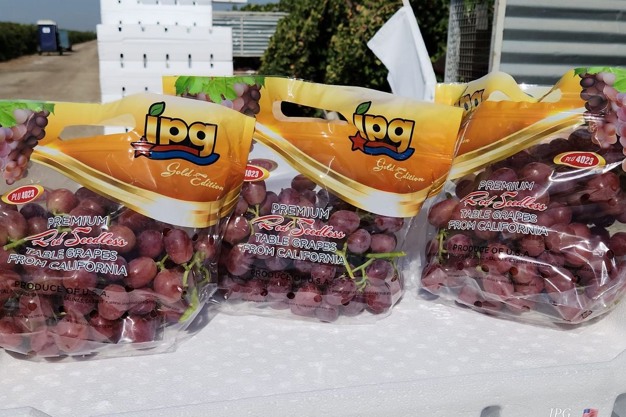
California grapes are pristine at packing, highlighting the urgency for improved ocean transit times.
Lost market share in citrus
The U.S. citrus export industry has faced similar challenges. Dovolis goes on to say, "Historically, America was the number one exporter to Asia during the California citrus season. However, due to increasingly unreliable shipping and prolonged transit times, over the past seven years, the U.S. has lost substantial market share—down 35–50 percent since COVID—to competitors such as Egypt. Egyptian citrus, although of lower quality, reaches key markets in Asia within 14 days, significantly faster and more reliably than American citrus. Consequently, former customers in markets like Singapore and Malaysia, facing risky 35-day transits, have shifted entirely to more dependable, if slightly lower-quality, suppliers. With the vision of President Trump, all this can be fixed, and we can regain our market share before it's too late. Our growers need this, our national production volume needs it, and we urgently need these markets back to prevent downward pressure across the entire industry."
According to Dovolis, the following action steps are needed for U.S. ag to become competitive again in foreign markets:
• Aggressively negotiate bilateral tariff elimination on key agricultural exports.
• Avoid seasonal import tariffs on key items such as Peruvian and Chilean citrus and grapes.
• Establish dedicated agricultural export ocean shipping routes operated by American carriers.
• Expand U.S. port infrastructure and streamline logistics for agricultural exports.
"This is more than agriculture policy—it's about securing America's economic future, strengthening national security, and supporting millions of rural American jobs," Dovolis said. "Mr. President, please prioritize agricultural exports and shipping infrastructure as cornerstones of your trade strategy, so that America can confidently reclaim its position as the strongest agricultural exporter globally. I am not asking for favors - I'm advocating for a bold strategy to protect the backbone of our nation: the American farmer."
 For more information:
Dalton Dovolis
International Produce Group (IPG)
Tel: (+1) 831-754-9740
[email protected]
www.internationalproducegroup.com