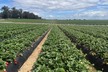
Florida contributes nearly 15% to the U.S. strawberry supply, with the Plant City-Dover region as the primary hub. Harvest timing is key before Valentine's Day when demand increases. Extreme weather, including Arctic air surges, threatens crop yields. Farmers use advanced irrigation to mitigate frost damage, adding operational costs. The industry is still recovering from hurricanes Helene and Milton in 2024, affecting growers. Climate change alters weather patterns, increasing uncertainty for future harvests and supply stability. January 2025 saw cold temperatures across the US, with Plant City, FL recording an overnight low of 28°F (-2°C) on January 25, over 16°F below the daily average, per NOAA data. Strawberries withstand temperatures down to 20°F, but 30°F can damage flowers, reducing yields.
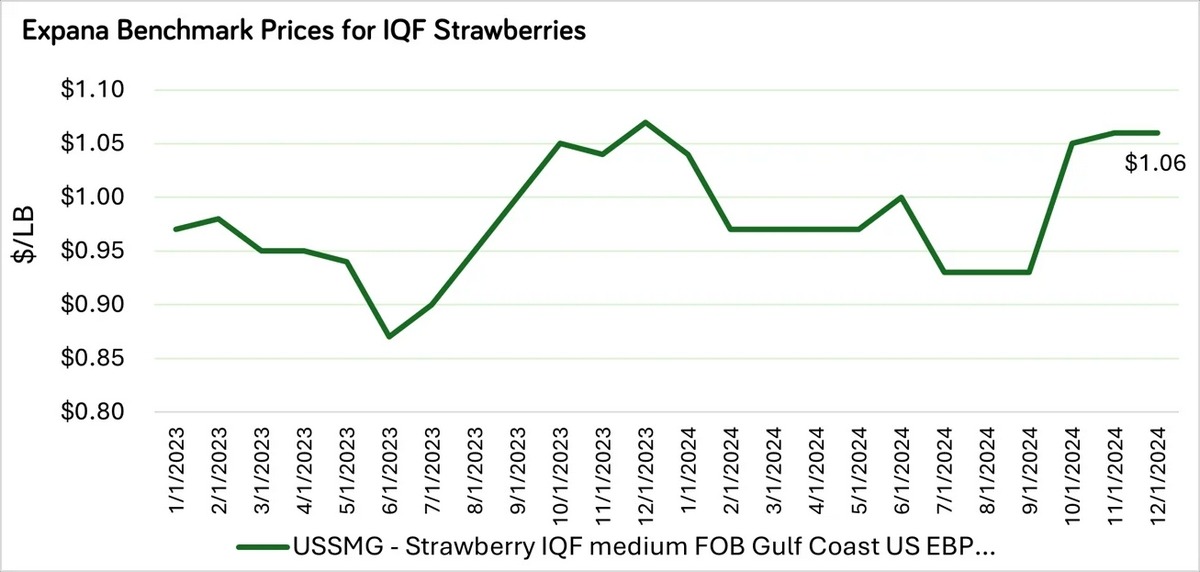
Long-term threats include Neopestalotiopsis fungal disease, raising concerns about future yields. Researchers at the University of Florida's Institute of Food and Agricultural Sciences (UF/IFAS) and industry partners conduct trials to develop disease-resistant varieties. These efforts aim to ensure sustainable cultivation practices and future production.
Despite challenges, industry forecasts predict strong yields for Florida-branded strawberries soon. Producers show confidence in maintaining supply through innovation, climate adaptation, and collaboration between researchers and growers. Investing in advanced techniques, disease resistance, and sustainable practices is essential for industry resilience. Ensuring a stable supply of high-quality strawberries will maintain Florida's position as a leading producer, especially during high-demand periods like Valentine's Day.
Source: Mintec/Expana