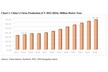
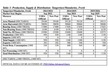
This provides an update to the report Citrus Annual_Brasilia_Brazil_BR2024-0043. The report has been edited from its original version to revise estimates and update the Post forecasts for production, consumption, and exports. The Brazilian orange crop for Marketing Year (MY) 2024/25 is forecast at 320 million 90-pound boxes (MBx) - standard reference, equivalent to 13 million metric tons (MMT), an increase of 5.4 percent compared to the Post estimate for MY 2023/24 (300 million boxes or 12.3 MMT). Brazil's production in MY 2024/25 is anticipated to recover slightly from the current season, which was the lowest since 1988. Post forecasts the Brazilian FCOJ 66 Brix equivalent production for MY 2024/25 at 1.0 MMT, an increase of 8 percent vis-à-vis the Post estimate for MY 2023/24 (930,000 MT), due to a slight recovery from the lower availability of oranges for processing from the current harvest.

This provides an update to Citrus Annual_Brasilia_Brazil_BR2024-0043. The current report has been edited from its original version to correct the orange production estimates and update the USDA forecasts.
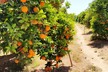
Post forecasts the total Brazilian orange crop for MY 2024/25 (July/June) at 320 million 40.8-kg boxes (MBx) - standard reference equivalent to 90 pounds - or 13 million metric tons (MMT), an increase of 5.4 percent compared to the Post estimate for MY 2023/24 (300 million boxes or 12.3 MMT). Despite the significant decrease in the current season, which was the lowest since 1988, Brazil is anticipated to recover slightly in the next season. The next harvest (MY 2024/25) is expected to show improvement from the current season (MY 2023/24) due to expectations that La Niña will bring more regular rains and cooler temperatures.

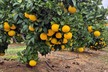
Brazil's orange crop for MY 2023/24 will be the smallest in thirty-five years. Post contacts affirmed that the crop faced premature flowering, which was the earliest in the history of the state of São Paulo. After the rains started, there was a very hot and dry summer followed by a dry winter. Thus, fruits from the September flowering did not develop well. While there were multiple blooms, they were of low quality, leading to a much smaller harvest than expected. The last time Sao Paulo faced such a drought was in 2014. In addition, temperatures averaging two to three degrees Celsius above the ideal damaged the crop.
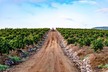
Dry weather has reduced fruit production for five consecutive seasons in the citrus belt, which is composed of the northwest of São Paulo and the western part of Minas Gerais, known as "Triângulo Mineiro".
To view the full report, click here.
 For more information:
USDA
Tel: +1 (202) 720-2791
Email: [email protected]
www.usda.gov