The Teton Russet potato variety has now been added the list used for McDonald’s World Famous Fries. Teton Russet is a product of a 14-year research cooperative among The U.S. Department of Agriculture, University of Idaho, Oregon State University and Washington State University potato breeding programs.
With this acceptance, the Teton Russet becomes the ninth variety of potato to be used by McDonald’s in North America.
“We’re proud to add the Teton Russet to our short list of potato varieties used to make one of our customers’ favorite menu items – our World Famous Fries,” says Daniel Roche, McDonald’s Global Quality System Manager, Agricultural Products. The Teton Russet has already begun rolling out to suppliers/restaurants as early as August as harvest began in the Pacific Northwest.
Fact Sheet About Teton Russet
Teton 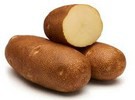 Russet (experimental designation A0008-1TE) is a product of the cooperative Northwest (Tri-State) Potato Variety Development Program comprised of the USDA/ARS, University of Idaho, Oregon State University and Washington State University(WSU).
It resulted from a cross between Blazer Russet and Classic Russet in 2000 by the USDA-ARS at Aberdeen, Idaho, with its release as a new potato variety in 2011, following multiple years in public and industry trials in the Western U.S. The name, Teton Russet, was chosen to denote its initial selection in the field at the University of Idaho’s Tetonia Research and Extension Center near the scenic Teton Mountains.
The tubers are oblong with moderate russet, good skin and shallow eyes. The variety has a consistent specific gravity of 1.082 and is resistant to dry rot. It was noted both for fresh market and processing in the 2009 Potato Cultivar Evaluations compiled by the WSU Potato Research Group.
Teton Russet yields at 100-110 days after planting are similar or slightly higher than standard Russet Norkotah but note that the tubers are generally 1-2 oz heavier on average if planted at the same in-row spacing as Russet Norkotah. Teton Russet should be handled as gently as possible to minimize bruising and skinning.
The fry characteristics, meeting McDonald’s set standards for its World Famous Fries, are light in color and consistent in quality. Fry color values were USDA 1-2 throughout the nine months of storage for Teton Russet and were lighter than those of Russet Burbank. Teton Russet had a lower incidence of sugar ends (darker fry color at the stem end of the tuber) than Russet Burbank. Mean percent weight loss in Teton Russet after nine months of storage was equivalent to that of Russet Burbank at 5.1 percent (average of three storage temperatures).
For more information:
PVMI – Potato Variety Management Institute
60380 Chickasaw Way
Bend, Oregon 97702
Tel.: +1 (541) 318-1485
Tel.: +1 (541) 207 2595
www.pvmi.org