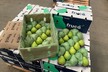
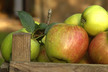
Cherry trees infected with the Little Cherry Disease bear small, bitter or bland fruits that often lack attractive coloring. The disease is a significant concern for growers, reducing yields and eventually causing fruit to fail entirely.
Scientists at Washington State University have teamed up with cherry growers to find improved defenses against a disease that devastated orchards 70 years ago and has resurfaced in the Pacific Northwest.
Named for its unpalatable symptoms—small, insipid, colorless fruit—Little Cherry Disease encompasses several pathogens that infect sweet cherries and other stone fruit trees.
In Washington and Oregon, the main culprit is a bacterial pathogen called X-disease phytoplasma, which is spread in orchards by small insects called leafhoppers. Symptoms are usually noticed only a few weeks before harvest.
“You get no warning,” said Scott Harper, WSU virologist and director of the Clean Plant Center Northwest. “Everything looks fine, and suddenly things are not fine.”
Once infected, there is no remedy other than speedy removal of sick trees to slow transmission.
Repeating cycle
In the late 1940s and early 1950s, Washington cherry growers experienced a major outbreak of Little Cherry Disease. They managed to quell it through aggressive destruction of infected trees. A smaller outbreak followed in the 1980s.
Now, the cycle is repeating. Reports of Little Cherry began rising in 2017, and today it is again a significant concern for Northwest orchards.
Scientists at WSU and Oregon State University, cherry growers and processors, and other partners formed the Little Cherry Disease Task Force in 2018 to coordinate research in response to the syndrome. Tobin Northfield, an entomologist based at the WSU Tree Fruit Research and Extension Center in Wenatchee, chairs the task force.
“If we do nothing, this disease will have a huge impact on our ability to grow cherries,” Northfield said. “We’re trying to find effective controls as quickly as we can.”
This summer, Northfield and fellow task force members launched several experiments aimed at halting the disease’s spread. Funded by the Washington Tree Fruit Research Commission, task force members are working closely with growers on research.
Click here for the full report