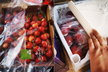
“Demand for currants comes from Europeans who live in Michigan. Our goal is to let every European in Michigan know that we have currants because they’re not available anywhere else in Michigan,” says Julia Coon of Coleman, Mi.-based Coon’s. “But Americans aren’t familiar with currants.”

Coon’s is still new to the business with three years of currant growing on behind them. But the potential looks positive with a 40-acre farm ahead of them and currently growing three types of currants: Hron currants, a variety developed in Canada; Rovada (a well-known variety) and Jonkheer van Tets (an older European variety).

Volume rising
“Last year was a small harvest for us—we probably had a handful on each bush,” says Coon. “This year we probably had one lb. on each bush and next year we’re expecting up to three lbs. per bush. So we’re growing every year.”
That said, what comes off the bush, Coon’s has the market virtually to themselves with no competitive growers in the region. “And currants need colder winters and cooler summers with a lot of moisture,” says Coon. “So Michigan is perfect for currants. We know that currants are more popular in Canada than the U.S. but we really don’t see much competition. And products that are made from currants that we see in stores are mostly imported from Europe.”
Berry byproducts
What Coons doesn’t sell to local customers via U-pick it turns into a byproduct of its own—wine, which Coons hopes will be the way to introduce Americans to red currant consumption. “The wine doesn’t just appeal to Europeans—everybody likes wine,” says Coon. “And I think the wine will open up the market—more people who try the wine will try currants and other currant products.”
Meanwhile the next challenge is for Coon’s harvesting to keep up with the growth. “In America, currant harvesting equipment doesn’t exist,” says Coon. “We have to pick it all by hand which we’re doing right now but we’re getting to the point of looking at harvesting equipment.”
For more information:
Julia Coon
Coon’s Berry Farm
Tel: +1-(989) 615-4765
[email protected]
www.coonsberryfarm.com