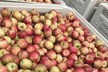
Cranberry farmers in South Jersey are busy harvesting their crop, which is forecast to be down from last year.
As of Oct. 10, the state’s 2017 cranberry production was forecast to be down 9 percent, according to a study released by the National Agricultural Statistics Service of the United States Department of Agriculture.
NASS expects 590,000 barrels of cranberries to be produced this year.
Last year, NASS forecast 588,000 barrels, but the state produced 653,000.
The projected numbers fluctuate for a variety of reasons, New Jersey Department of Agriculture Secretary Douglas Fisher said.
“(The farmers) are looking for color. When it’s cooler, the berries have a chance to mature and become a fuller red,” Fisher said.
Despite this October’s warm start, Fisher said he doesn’t think it will have a major effect on this year’s harvest, which began in September and runs until the first week of November.
New Jersey is the third-largest cranberry producer in the United States. It harvests from about 3,000 acres, primarily in Atlantic and Burlington counties, Fisher said.
In the past 20 years in New Jersey, the climate has been stressful for farmers, said Nicholi Vorsa, a Rutgers University New Brunswick biology professor and director of the university’s Philip E. Marucci Center for Blueberry and Cranberry Research and Extension.
During the warm growing days of June, July and August, farmers need to irrigate the vines to keep them cool. “The higher moisture environment leads to a higher risk of fruit rot,” Vorsa said.
Farmers control fruit rot and any possible diseases through fungicides. But some fungicides are no longer available, and some diseases are resistant to the fungicides, Vorsa said.
The Marucci Center creates different varieties of cranberries that suit the needs of future production. Berry varieties from 100 years ago wouldn’t survive in today’s climate, he said.
The PICC grows four varieties from the Marucci Center: Crimson Queen, DeMoranville, Mullica Queen and Haines, a berry that was named in honor of Bill Haines Sr., who was instrumental to the success of the Marucci Center’s early cranberry breeds.
Source: pressofatlanticcity.com