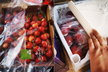
Turkey is one the three largest cherry exporters in the world. Although annual volumes differ, Turkey aims to become the largest exporter. In order to achieve this, volumes have to increase until Turkey produces 10% of the world's cherries.
In 2015/2016, volumes rose by 20% to 565 000 tonnes, with high yields in Konya and Manisa. This was thanks to the fine weather experience then. Last season's total cherry production was 525 000 tonnes. Bursa's large yield counteracted the losses due to frost in the Canakkale and Balikesir regions.
Less for export
A production of 500 000 tonnes is estimated for the upcoming season. In June, the cherries were hit by hail, which damaged a portion of the crops. Sweet cherries make up 350 000 tonnes of the estimated volume. The remaining 150 000 tonnes are Morelles. Cherries can be cultivated in different areas in Turkey, which means a difference of 40 to 45 days when it comes to harvesting. Marmara is the most important region. Although the season started well, hail and heavy rains were experienced just before the harvest. According to reports from Bursa, growers were unable to meet the Chinese demand. Produce not exported also did not reach good prices on the domestic market. The country has 34 million cherry trees, of which 21 million were in production in 2016. Since 1995, when there were about 6 million tress, the number of trees in production has more than tripled.
A production of 500 000 tonnes is estimated for the upcoming season. In June, the cherries were hit by hail, which damaged a portion of the crops. Sweet cherries make up 350 000 tonnes of the estimated volume. The remaining 150 000 tonnes are Morelles. Cherries can be cultivated in different areas in Turkey, which means a difference of 40 to 45 days when it comes to harvesting. Marmara is the most important region. Although the season started well, hail and heavy rains were experienced just before the harvest. According to reports from Bursa, growers were unable to meet the Chinese demand. Produce not exported also did not reach good prices on the domestic market. The country has 34 million cherry trees, of which 21 million were in production in 2016. Since 1995, when there were about 6 million tress, the number of trees in production has more than tripled.
Turkey is, along with Chile and the US, one of the largest cherry exporters in the world. The country exports between 50 000 and 80 000 tonnes of cherries. This is 15 to 25% of its total production. Its most important markets are the EU and Russia. The export volume has increased over the last few years. This is due to increased supply and quality on the domestic market. In 2016 the country exported 80 000 tonnes.
Although Turkey's relations with Russia have improved, this was not the only problem facing exports. Frances closed its borders to all countries that did not ban specific pesticides. Although Turkish growers rarely used these products, the country has since banned them. Disappointing quality has made it difficult for growers to meet the international demand. In the first six months, exports have fallen by 25% compared to the previous year.
Peaches and nectarines
Peaches are mainly grown in the Bursa, Canakkale, Izmir and Mersin provinces. In total, Turkey is good for 3% of the world's peach production. Peaches and nectarines are harvested from May to October. The long season is partly thanks to the different cultivation regions.
In 2015/2016, 560 000 tonnes of peaches and nectarines were harvested. This year, due to the bad weather, it is estimated to be just 510 000 tonnes, a drop of 10%. For the 2017/2018 season, estimates are standing at 445 000 tonnes of peaches and 60 000 tonnes of nectarines. This slight drop in production is mostly due to hail damaged experienced in June by some growers in Marmara. Growers in other areas are satisfied with their yields. The area is also increasing. In 2007 Turkey cultivated only 15 million peach and nectarine trees. Last year this number amounted to 18,25 million trees. Nectarines, in particular, have fared well. The number of these trees has doubled in the last decade, thanks to the growing demand in the export market.
Last year, due to the boycott, Turkey could not export any peaches to Russia. After the sanctions were lifted, exports picked up again in the first six months of this year. Unsurprisingly, the volume increased by 25% to 30 000 tonnes, compared to the same period last year.