The overseas top fruit season is reaching its end. According to Stefanie de Puysseleir, top fruit specialist of Capespan Continent, the season couldn’t be called ‘normal.’ “First of all, various countries of origin muddled on with climatological circumstances. South Africa was struggling with drought, causing less availability and smaller sizes of the fruit. The Chilean fruit had slightly poorer quality this year, some areas had hail.”
Not bad
She continues: “Yet the market wasn’t unfavourable for the available fruit. Regarding price, it wasn’t bad for apples, and it was regular for pears. What was noticeable was that apples and pears weren’t very enthusiastically received during the summer. Especially now that the end is near, we usually see an increased demand, but it’s quite calm this time. All in all, we could call it a fair season, and it was actually convenient that there were shortages in South Africa.”
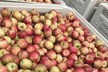
These photos were made by FreshPlaza during a visit to Capespan, South Africa, in 2015.
Heat
An important reason for the decreased demand is the heat. “Spring had higher temperatures, and fewer people think of top fruit when it’s 20 degrees Celsius or more. Besides, there was an incredible amount of competition from summer fruit on the market. Spain had a very large harvest of stone fruit, and melons and other fruit were also readily available. That means it wasn’t too easy to get consumers to return to apples and pears. In the last month-and-a-half we have noticed that demand for pears has increased because of the large European harvest. By now this has started again.” She hopes the season will end well. “We are now focusing mostly on Pink Lady and Braeburn from New Zealand. The final Forelle has been sold, and within a week or two we’ll really be finished.”
More in 2018
By now, Stefanie has 14 years of experience in selling top fruit. “I’ve noticed we have to be careful with our predictions. The fact is that the apple production is much lower in the Netherlands and Belgium this season. It might be possible to start with overseas product earlier in 2018, but that might not necessarily be the case. A small European harvest can also cause traps, it could be that growers handle their stored product differently. We have to be careful with predictions that are too positive for next year, but I do expect to import a larger volume in 2018.”
Less available
In the past, Europe was an important market for overseas growers. “We got the fruit then, whether we wanted it or not. This was because we were the only buyer. By now, all global markets have opened for overseas top fruit. That brings a completely different balance to the market, and the availability of the fruit is much smaller.” For more information:
Stefanie De Puysseleir
Capespan Continent N.V.
Direct: +32 3 546 09 22
Fax: +32 3 546 09 09
www.capespan.com