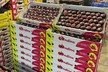
Orchardists seek redder Honeycrisp apple for better profits
“What happens with the great majority of very popular varieties is that a round of red mutations soon follows,” said David Bedford, apple breeder and senior research fellow at the University of Minnesota Horticultural Research Center.
As the one of the developers of the original Honeycrisp, he is familiar with some of these newer, shinier models. A big advantage of a redder Honeycrisp is that growers can pick them as soon as they’re ripe and not have to leave them on the tree to color.
Earlier harvesting is better for storage, said Randy Beaudry, Ph.D., a professor at Michigan State University’s Department of Horticulture. “Sometimes we have to wait just a little too long for that color development to take place, so even though I think of Honeycrisp as a bicolor apple, the redder fruits let us get it off the tree in better shape.”
The biggest push behind redder sports, however, is that they command a higher dollar from buyers.
“We’re planting the redder varieties ourselves, because we want to get premium packout, and as growers, we’re getting paid for color,” said Randy Steensma, owner and president of Honey Bear Tree Fruit Company in Wenatchee, Washington. “As the production volume of (high-color) Honeycrisp increases, the bar for color standards of Honeycrisp is just going to get higher and higher.”
Read more at goodfruit.com