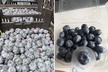
Sierra and Selva Exportadora is working with the Universidad Nacional Agraria La Molina (UNALM) on a project called the "Domestication of Native Berries from Cajamarca, related to blueberry, through the use of biotechnological tools" and, according to them, the country can obtain Peruvian blueberry varieties through their domestication via the application of biotechnological techniques and sustained work.
The project coordinator, Antonietta Gutierrez Rosati, said that the native berries had enormous potential in the national and international markets. Gutierrez Rosati said that the region of Cajamarca alone, had the Pushgay, a native berry that grows naturally in the area and which this study seeks to adapt to the different regions of the country and to domesticate so as to find the basis of a new variety of Peruvian blueberry.
She said they had already conducted tests and discovered that the Pushgay contained up to three times more antioxidants than the blueberries that were currently on the market (Biloxi variety). That's why it is also considered a very important source for medicine, as it is a fruit that contributes to counteract cancer, diseases of the urinary tract, and other related diseases.
"The rusticity of these wild species allows them to better adapt to the climatic conditions of the territory; as a result, they can reach a balance where, for example, the diseases that affect blueberries won't affect Pushgay, because it is a more rustic plant, with a good production, and it can also reach high prices in the global market because it is an organic, ecological product," she said.
Gutierrez Rosati said that, even though the ongoing research was a long-term study, they trusted the proposed work and support of Sierra and Selva Exportadora's Berries National Program as strategic partner of the project, as they had promoted the cultivation of blueberries and introduced them to the market in the last five years.
Origin in Cajamarca
Sierra and Selva Exportadora, an entity of the Ministry of Agriculture and Irrigation, stated that the UNALM chose Cajamarca to start this project because it was the place where the entity - then Sierra Exportadora - initiated the berry's plans and business projects within the framework of Peru's Berries National Program.
The proponents of the project are presenting and socializing it so that the regional and local governments, the private sector, and the universities can join this effort through different modalities. For example, the students at the universities of Cajamarca could direct their research and thesis topics to work with native Berries.
During this year and in 2018, researchers will make important collections and clonal banks of Cajamarca's wild blueberry species so that they can later on carry out their corresponding genetic studies.