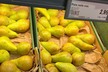
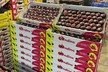
Valued for their benefits to health, Argentine pears are seeking to reposition themselves in the domestic market. In order to understand the detailed nutritional characteristics of the Williams variety, a team of researchers from the INTA and INTI studied its properties and chemical composition. With that information they designed a label that will be placed in boxes, bags, or on supermarket shelves, so that consumers can find out their nutritional value.
Gabriela Calvo, a conservation specialist of pome fruit at INTA Alto Valle -Rio Negro- said that "the fruit's quality is usually evaluated through its external appearance: its color, size, and defects." However, she said, "consumers have been having more specific demands for some years, including the organoleptic or sensory part of the fruit."
Nora Barda, a specialist in sensory evaluation of the INTI Villa Regina -Rio Negro- highlighted the importance of the design and use of nutritional labels. "It allows consumers to get information about the properties of a product and help them decide if they will buy it or not."
After three years of study, the research team designed a label so that consumers get to know what nutrients and characteristics the William pears have in order to add value to the business and encourage consumption.
Argentina's Food Code exempts the use of nutritional labels for fresh fruits and vegetables, but states that the companies who want to use it voluntarily must comply with the same rules as processed products.
"Even though its use is not mandatory in fresh fruits and vegetables, knowing the properties of pears is an essential contribution to add value to the fresh fruit and the food products manufactured from it," Barda said.
There are no campaigns to encourage pear consumption, even though it is "a fruit rich in dietary fiber, and suitable for people with diabetes, because of the quality of its sugar" said Calvo, who added: "In its optimal maturity point it is sensually attractive. It has a tender pulp with a high juiciness that makes it suitable for all ages."
According to Barda, "the study included a nutritional analysis on the fruit's sugars and fibers contents and types, its antioxidant capacity, and mineral and vitamin contents."
The label is available on the websites of both institutions and, to use it, producers must request permission from the SENASA.
Source: INTA