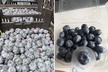
Peru has become the second largest exporter of grapes for the United States and the fifth worldwide, said the Commercial Office of Peru (OCEX) in New York.
These exports surpassed US $700 million in 2015 for the first time, US $200 million of which were sent to the United States, surpassing the sum of Peruvian grape exports to China and Hong Kong.
This is currently Peru's biggest fresh food export, even surpassing asparagus exports.
In its beginnings, Peru exported 600 tons of grapes when the northern hemisphere was in summer and for the Chinese new year, a time when few countries could meet the world's demand prices were extremely high.
Growth was sustained and exports in 2008 amounted to US $31.6 million, when Peruvian grapes were granted formal access to the United States thanks to a coordinated health protocol between Senasa and the United States Department of Agriculture (USDA).
Since then, the average export growth amounts to hundreds of millions of dollars per year.
The Market
In 2016, the grape market in the United States amounted to $2.7 billion dollars, i.e. 6.7% more than in the previous year.
This increased demand for grapes was caused by several factors: grapes are easy to eat and even children can eat them, there is an available supply throughout the year in the various markets, and the consumers' increasing desire to eat fresh and healthy products.
Grapes have various benefits for consumers specifically on issues such as vision, high blood pressure, diabetes, and colon diseases. Additionally, they also contain valuable antioxidants.
World supply
The Packer journal estimates that world production of grapes will increase from 20,000,000 to 21,900,000 tons in 2017, i.e. almost 10% per year, which will allow this important market to continue developing.
The maturation of markets normally leads to a gradual decrease in the average product price, sacrificing some performance in exchange for higher sales volumes.
Chile, Mexico and Argentina have increased their production looking to enter the market at times of lower supply and higher prices.
The Chilean harvest now begins in December, as the country is trying to compete with the Peruvian product that is already positioned at the time of the year, although there are larger volumes several months later.
The Asian demand for grapes has increased in the Chinese New Year and much of the Peruvian production is sold at high prices in those countries during that season.
According to exporters, price increases in the United States in early 2017 have not been as important as in previous years, but the market has been affected by a shortage of local production due to winter.
Thus, according to the USDA report on prices, grape prices in January 2017 doubled when compared to January 2016.
In most supermarkets in Manhattan, New York, the price in January 2016 amounted to US $3.99 per pound, and by the end of the month the price had increased to US $ 4.99 per pound in some supermarkets.
In gourmet shops prices rose to US $5.99 per pound or up to US $6.99, which used to be the price in supermarkets in previous winter seasons.
Meanwhile, prices in some stores, such as the Costco chain, prices per pound fluctuated between US $2.50 and US $1.60 (for the grapes with seeds) in four to five pound packages. Many of these grapes were Peruvian and had brands like Rio Peru, Goin Ape, or Sweetums.
Peru should always take advantage of windows with high prices in each market, but exporters must also prepare to compete effectively in the export of large volumes, and think about positioning their brands and their best quality in the North American market.
Source: gestion.pe