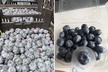
Demand for berry fruit is growing by the year around the globe and Nuffield Scholar Wade Mann is urging growers to consider integrated pest management strategies (IPM) to promote further growth and safer growth.
The 2015 Nuffield Australia Scholarship winner explored and assessed IPM strategies globally to identify emerging and innovative technologies available for commercial application in the greenhouse hydroponic berry industry in Australia.
“Berries by nature are an easy pick and ready to eat fruit without the necessity for peeling, and as a result we need to be aware of the food safety, the maximum permissible residue levels and also the limited number of chemical controls that are available to pest and disease control,” Mr Mann said.
“These factors are the underlying motivation for primary producers in the berry category to adopt IPM strategies.”
“The adjustment in climatic conditions within a greenhouse has provided consistency and stability for berry crop growth and development, but inadvertently this has created a suitable environment for pest and disease establishment and infestation.”
“An IPM strategy is a holistic approach to crop protection that demands attention to monitoring and scouting; identification of the pathogen; recording of data and forecasting to determine economic thresholds,” he said.
“A range of controls including physical, cultural and biological based options should be considered before reverting to chemical controls, where possible."