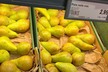
What does the future of fruit cultivation in Belgium look like? In recent years, an important shift from apple to pear cultivation became obvious, due to the low prices for apples. “This trend started 20 years ago, and the pear area has been bigger than the apple area since 2008. The trend will continue in the coming period.” In 2011, the Belgian pear area amounted to 8,324 hectares, and the apple area amounted to 7,404 hectares. In 2016, pears had 9,691 hectares and apples 6,491 hectares.
Too much competition for apples
“The difference between the apple and pear area is becoming larger, an increasing amount of pears come from Belgium. We are approaching 10,000 hectares,” says Jef Vercammen from pcfruit. “As regards apples, there is too much competition. Production in Poland increases considerably every year, and Romania is also planting many trees. They sell at much lower prices, and it is therefore becoming more difficult to be distinctive with ‘regular’ apples. That is also why many cultivators are choosing to switch to pears. Some now also cultivate cherries - that area has also increased.”
Conference
As it is looking now, Conference will remain the most important pear strain in Belgium for a good while longer, according to Vercammen. He sees a need for renewal, but new pear strains do not yet take up a large share. “We do research, and we provide cultivators and auctions with advice about new strains, but in the end, producers choose their own varieties.” Good alternative strains are Cepuna and Celina, according to him. “There is demand for these kinds of new pears, and I expect this will increase. But they will not yet catch up to Conference volumes, not even in ten years.”
For more information:
Jef Vercammen
pcfruit
Fruittuinweg 1
3800 Sint-Truiden, Belgium
Tel: +32 (0)11 69 70 80
[email protected]
www.pcfruit.be