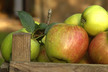
Last year, farmers in New England harvested a bumper crop of apples, but this year things aren't looking as positive; this year's batch is a bit smaller for many farmers as they struggle with abnormally dry and drought conditions.
There are still enough apples to go around at most pick-your-own operations, some of which opened during Labor Day weekend. But some farms are not offering that this year and are taking their apples directly to market. Even before the dry weather, higher-than-normal temperatures in February and March, followed by a cold spell in April, challenged the crop.
The U.S. Department of Agriculture last Friday 9 September, declared Providence County a primary natural disaster area because of the drought, making farmers in Providence County as well as Bristol and Kent counties eligible for low-interest emergency loans.
Farmers in southern New England have received less rain than those in northern New England.
In Rhode Island, apples are available a bit earlier than in previous years. Jon Clements, a fruit specialist at the UMass Extension, expects the Massachusetts crop to be about 15 to 20 percent below average. He said that's not necessarily a bad thing, because in years when Massachusetts orchards overproduce, they are sometimes left with an excess of apples that they can't sell.
George Krivda, of the Connecticut Department of Agriculture, said "it's not scientific," but people feel when the apples are a little smaller, "they become more flavorful" because the fruit becomes more concentrated.
He noted that Connecticut was affected differently by drought conditions. The northern part of the state experienced very little rain deficit, compared with the southern part of the state.
"Each orchard could tell its own story based on its own micro-climate," he said. "It's case-by-case. There is no black and white, universal answer."