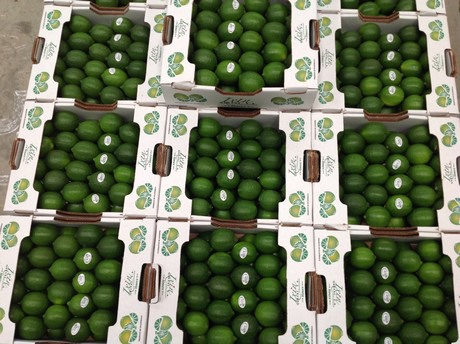
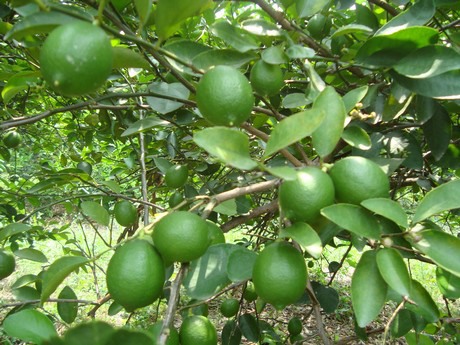
Persian limes are grown in the north and east of Guatemala. Before 2012, this crop had barely any market potential, since 100% of the demand of its main market, the United States, could be covered by Mexico, which has a much higher production. However, the Guatemalan company Ixin Quesal managed to reach the European market with support from the Dutch CBI and the firm's largest client, Schrijvershof, also Dutch. At the moment, 95% of the company's sales correspond to the European market.

Ixin Quetzal is an SME formed by producers and exporters of Persian limes which also has a social function. Up to 2012, the region could only grow coffee and cardamom, which created jobs only for a few months per year. This situation has now changed. "Guatemala as a country has very few lime plantations, but it is a crop with potential thanks to the country's climate, rich soil, water, etc.," explains Judith Quevedo, of Ixin Quesal. "We have regions that are able to produce the quality demanded by the European market."
Reaching Europe has opened many doors for the country. Quevedo explains that the trade fair Fruit Logistica has allowed the company to get more customers. "Now we will have the opportunity to sell to the UK, to London," explained Quevedo. "We'll start there in May with 18 kilo boxes and we'll also start shipping Creole limes or Mexican limes, a small fruit with seeds and a unique flavour, in 18 kilo boxes (1 kilo meshes)." Quevedo explains that the campaign will kick off with the Persian lime calibres that their Dutch customers do not want and with their creole limes, and that, as production increases, they will be able to supply more customers. "We expect to continue growing every year; our growth will become much more noticeable in about three years," she predicted.
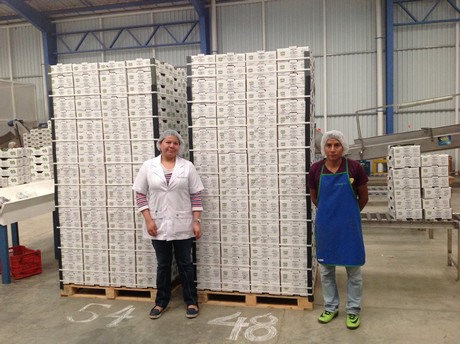
Guatemala produces and exports Persian limes all year round, although their peak season runs from May to September, which are very rainy months, according to Quevedo. "In the months of October, November and December we also have an average production, but January, February, March and April are slow months, even though you may still export a container every two weeks with 18 kilo boxes," adds the exporter. "There is always production; it is a very generous crop," she concludes.