Francesca Nadalini from the Nadalini commercial farm located in Sermide (Lombardy) comments on how bad weather affected melon crops in the Mantova area (Lombardy).
Francesca says that, "the situation is difficult because the climate affects us on two different levels: rainfall and lack of sunlight. The former complicates all on-field operations which then take longer and cost more, the latter prevents plants both in greenhouses and on fields from growing."
"We carried on with transplants every time we could, but so far we have only planted 70-75% of what we had planned. Even if it hasn't been raining for a few days and the soil is slowly drying up, heavy machinery still can't enter fields."
"Yesterday, for example, it took us hours to extract the machinery stuck in the mud. Production costs should consider this: with such conditions labour force has to work longer and harder, especially since the machinery doesn't work properly."
We must not underestimate this. Farmers are also stressed from a psychological point of view: they are waiting for the right moment to enter muddy fields to carry on with transplants even though they don't actually know if the plants will grow and produce melons.
"I would like to highlight how farmers are persevering and continuing to fight even against the most hostile weather conditions," adds Francesca.
"If we take a look at data coming from the Arpa di Sermide station, 406 mm of rain has fallen between October and March. And not only this, in six months it rained for 64 days, 2-3 days a week. On top of this, temperatures were mild, thus damaging the soil, where temperatures below zero would have favoured root growing."
"I would like to highlight how farmers are persevering and continuing to fight even against the most hostile weather conditions," adds Francesca.
"If we take a look at data coming from the Arpa di Sermide station, 406 mm of rain has fallen between October and March. And not only this, in six months it rained for 64 days, 2-3 days a week. On top of this, temperatures were mild, thus damaging the soil, where temperatures below zero would have favoured root growing."
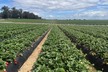
"The difference between greenhouses and open fields is considerable, in fact, in greenhouses, top openings provide better conditions, whereas everything in open fields is drenched and those plants that had been transplanted in mid-March are idle from a vegetative point of view, just as if they were planted a few days ago."
"The important thing is that the weather does not change suddenly. Melon plants like mild weather and we would just need a normal spring, sunny and a bit windy, so as to improve root systems. Also because we have covered the plants with plastic films and high temperatures would then burn them."
As regards harvesting, Franscesca Natalini expects to start without major delays in greenhouses around 20th-25th May, even though small plants already have flowers with swollen ovaries which, if fertile, will have to be thinned to guarantee the quality of fruits.
Our biggest worry is the open fields, where in June the supply will fluctuate and then queue up in July-August. "We will definitely have to have a look abroad, as I doubt that the internal market would be capable of absorbing all of the produce," concludes Francesca Nadalini.
Contacts
Azienda Ortofrutticola Nadalini
Via Milazzo, 262
Sermide (MN)
Tel.: (+39) 0386 915251
Fax: (+39) 0386 915900
Email: [email protected]
Web: www.meloninadalini.com