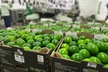
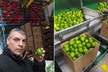
With the exception of grapefruit, citrus production in the EU in 2012-2013 was lower than last year’s. This is mainly due to the small orange harvest in Italy and the low production of easy peelers in Spain. The rain in the fall had a positive impact on the size and quality of the fruit. Export is going well, because production in competitive areas was relatively small.
After apples, oranges are the most cultivated fruit in the EU. More than 80% of all European oranges come from Spain and Italy. Other producing countries are Cyprus, Greece and Portugal. In total, the EU orange harvest approximates 5.6 million tons.
EU orange production
| Country | 2010/11 | 2011/12 | 2012/13 |
| Spain | 3,114,808 | 2,770,000 | 2,900,000 |
| Italy | 1,950,000 | 2,020,000 | 1,550,000 |
| Greece | 901,212 | 910,000 | 914,000 |
| Portugal | 208,000 | 205,000 | 206,300 |
| Cyprus | 24,000 | 24,000 | 24,000 |
On average, an EU resident eats 10 pounds of oranges a year, but consumption is strongly dependent on the country. In Spain, for example, they eat twice as much.
The EU is a net importer of oranges, in which import far exceeds export. The value of import of oranges in 2011-2012 amounted to approximately $ 611 million, while export was 230 million U.S. dollars. Most EU oranges go to other member states. The main supplier outside the EU, shipping from June to October, is South Africa, followed by Egypt, Morocco and Tunisia. The major exporting countries outside the EU are Switzerland, Serbia and Russia. European exporters do their best to penetrate markets in countries like Saudi Arabia, the Emirates and Brazil.
The total European production of easy peelers for 2012-2013 is estimated at 2.9 million tons, 8% less than the previous year. The main suppliers of easy peelers on the EU market are Morocco, South Africa and Turkey. The value of import of easy peelers in 2011-2012 is estimated at $ 394 million, the export value at 352 million. Russia is increasingly buying easy peelers, and is still growing as a place of export.
EU mandarin production
| Country | 2010/11 | 2011/12 | 2012/13 |
| Spain | 2,196,890 | 2,115,900 | 1,900,000 |
| Italy | 758,000 | 817,000 | 790,000 |
| Greece | 120,000 | 120,000 | 120,000 |
| Cyprus | 55,000 | 51,000 | 43,000 |
| Portugal | 34,185 | 34,200 | 34,800 |
The EU lemon production reached approximately 1.15 million tons in 2012-2013, 9% less than the previous year.
The import of lemons in the EU is significantly larger than the export. The export value amounted to $ 462 million in 2011-2012, while exports scored no higher than 103 million. Argentina is the largest supplier, followed by Turkey, Brazil and South Africa. Outside the EU, Russia is the most prolific buyer of European lemons.
EU lemon production
| Country | 2010/11 | 2011/12 | 2012/13 |
| Spain | 717,906 | 730,000 | 629,800 |
| Italy | 488,000 | 460,000 | 440,000 |
| Greece | 33,000 | 45,000 | 50,000 |
| Cyprus | 16,000 | 18,000 | 18,000 |
| Portugal | 13,132 | 13,000 | 12,600 |
The grapefruit harvest in 2012-2013 amounts to about 91,000 tons and is slightly larger than last year. In 2011-2012 $ 282 million tons of grapefruit was imported, mainly from Turkey, South Africa, China, the USA, and Israel. The value of export amounted to $ 20 million.
EU grapefruit production
| Country | 2010/11 | 2011/12 | 2012/13 |
| Spain | 46,824 | 51,000 | 55,000 |
| Cyprus | 23,000 | 20,000 | 18,000 |
| Italy | 7,000 | 7,000 | 7,000 |
| Greece | 5,800 | 5,500 | 5,800 |
| Portugal | 208 | 200 | 210 |
Spain
Approximately 50% of all European oranges is produced in Spain. In 2012-2013, production was about 2.9 million tons, 5% more than the year before. Due to the dry, hot summer the season in Andalusia started 10 days later, in Murcia and Valencia a week later than normal. As a result, both the color and the sugar content were good. Due to the rain in autumn they were also of good size.
In Valencia, citrus acreage is slightly down due to the pressure of urbanization. We also see a shift to other fruits like kiwis, peaches and nectarines. In contrast, acreage in Andalusia is up.
The production of easy peelers in 2012-2013 was approximately 1.9 million tons, 10% less than in the previous year. This was mainly caused by a poor harvest of Clementines. There were however, more Satsumas. Only in Andalusia, there was a greater production, as orchards planted 5-10 years ago are now in full production. To cope with the hot dry summer considerable irrigation was called for, and fruit growers hope the prices, the smaller production and quality will compensate for this and that returns will be higher than last season.
Also with easy peelers we see an increase in the varieties aimed at extension of the season. The Clemensoon Clementine is an early type, which produces a good-sized product with a good sweet-sour ratio. The late varieties are the Sagfor and Garbi, although Clemenule is still the major variety in this part of the year.
Lemon production for 2012-2013 is estimated at 630,000 tons, 12% less than last year. Spanish lemons are grown mainly in the south of Spain: Murcia, Valencia and Malaga and Almeria in Andalusia. The main varieties are the Verna, a soft and juicy variety with few seeds that takes up 30% of production, and the Fino (70%) mainly popular within the industry. The introduction of new varieties is rather slow.
It is expected that the grapefruit production will grow with 3%. About half of this crop takes place in Murcia and the main variety is the Ruby Red. Grapefruits are only a small part of the Spanish (and the EU’s) citrus production. The vast majority of grapefruits on the European market come from elsewhere.
Italy
The 2012-2013 Italian orange production is expected to be 23% smaller than last year, due to bad weather in the spring. The quality of the fruit is good, but the early races are fairly late so the season is relatively short. Sicily (59%) and Calabria (22%) are the main production areas. Tarocco, Moro, Sanguinello Sanguigno Oval or Calabrese, Biondo Commune, Navelina, and Washington Navel are this year’s major varieties.
In 2012-2013, the harvest of easy peelers (83% seedless Clementines and 17%mandarins) will be 3% smaller than last year. The sizes of the Avana are good, but the acreage decreases annually. The main areas are Calabra (50%), Sicily (23%) and Apulia (14%). The Avana and Tardivo di Ciaculli are the most cultivated varieties. The Oroval and Monreal are the main Clementine varieties.
The Italian lemon harvest this year is 4.3% smaller. More than 86% of all lemons are grown in Sicily. The acreages is decreasing considerably. The high production costs and low prices make the crop not very profitable. Femminello Commune, Mona Chello, and Interdonato are the varieties most commonly grown.
Greece
This year's Greek orange crop is about the same as last year’s. Peloponnese and Aitoloakarnaia (in the west) are the major cultivation areas. Washington Navel, Commons, Valencia, Navelina, Newhall and the main varieties. The production of easy peelers is probably as big as last year. They are typically grown in Igoumenitsa, Arta, Mosologgi and Thesprotia, in northern Greece. The Clementine is the major species.
The Greek lemon harvest this year is 11% larger, thanks to the good weather. They are grown in Corinth, Achaia, Piraeus, and Iliad, in the north of the country. The highly aromatic and juicy Maglini is the most common type. There is expected to be 5.4% more grapefruits this year. These are grown in Corinth, Kavala, Thessaly and Crete.
Portugal
There are about as many oranges in Portugal as last year, although it is possible that late species like Encore and Valencia Late will be more readily available because of the frost. From 1999 to 2006 the orange production in Portugal fell by 22%. Of the 17,000 hectares devoted to citrus 83% is planted with oranges.
In second place come the Tangerines, 80% of which is grown in the Algarve. This year's production is equal to last year and the quality and size are normal. 5% of the citrus plantations in Portugal consists of lemons. The production will be equal to last year and both sizes and quality are deemed good.
Cyprus
This year an average orange production is expected in Cyprus, both in terms of production and size. Famagusta, Limassol, Larnaca and Paphos are the main growing areas and Navels, Ovals (Shamoutis), and Valencia the most cultivated varieties.
The Cypriot easy-peeler harvest will be about as big as last year, with smaller numbers but larger sizes. They are grown in Famagusta, Limassol, Larnaca and Paphos Mandoras. Tangelo, Minneolas, Nova and Clementines are the leading varieties.
The lemon harvest on the island came a week later than normal due to hot weather. The harvest is expected to be as large as last year’s, with normal sizes. The Lapithiotiki (a local variety), the Eureka and Lisbon are major lemon varieties in Cyprus.
Although the grapefruit production will be about the same size as the previous years, it is historically much less than in the old days. The area of Limassol, where the seedless White Marsh grows, is the largest production area. On the new plantations in Paphos red varieties are planted (Star Ruby, Red Blush and Rio Red) to meet increasing market demand.