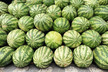
Genetic mapping paves way for disease resistant watermelons
The availability of a reference genome for a crop is extremely important in the deeper understanding of its molecular breeding and evolutionary history. In the watermelon genome study researchers presented a high-quality genome sequence of an East-Asia watermelon cultivar 97103 and resequencing of 20 watermelon accessions spanning the genetic diversity of the fruit.
Genome-wide duplication is a common event for angiosperms, and represents an important molecular mechanism that has shaped modern plant karyotypes. To access the origin of modern cucurbit genome structures, researchers analyzed the syntenic relationships between watermelon, cucumber, melon and grape. They proposed an evolutionary model that has shaped the eleven watermelon chromosomes from the seven-chromosome eudicot ancestors, through the transition from the 21-chromosome eudicot intermediate ancestors involving 81 fissions and 91 fusions.
Many of the watermelon cultivars have narrow genetic diversity and are susceptible to a large number of diseases and pests. In the study, researchers resequenced 20 watermelon accessions representing three different subspecies. As expected, wild watermelon contains greater genetic diversity than the cultivars. The results provide genetic opportunity for watermelon improvement.
The watermelon crop suffers significant losses from numerous diseases. It is urgent for researchers to investigate the molecular basis for better improving the pathogen resistance of this important crop. The results in this study showed that many resistance genes were located on chromosomes in clusters, indicating tandem duplications may serve as the evolutionary basis of resistance genes in watermelon genome. Moreover, evidence from the study supported the previous hypothesis that a large portion of disease resistance genes have been lost during watermelon domestication.
The integrative genomic and transcriptomic analysis yielded important insights into aspects of phloem-based vascular that held both in watermelon and cucumber. It is noteworthy that the watermelon phloem contained 118 transcription factors (TFs), whereas in cucumber only 46 TFs were identified and 32 TFs exit in both. Moreover, the team identified several genes associated with the valuable fruit quality traits, including sugar accumulation and citrulline metabolism.
Source: redorbit.com
Jianguo Zhang, Project Manager from the Beijin Academy of Agricultural and Forestry Sciences, said, "The high-quality genomic sequence opens a new way for the further studies of watermelon. The data resources could serve as a robust tool for better exploring the mechanisms underlying significant economic traits and regulatory networks and further for breeding improvement. It will also promote the evolutionary research of cucurbit crops and other basic biological studies such as sugar metabolisms."