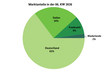
Carlet, the main stone-fruit-producing area in the Valencian Community, has lost 42% of the area devoted to this production in the last two years, according to calculations by the Sant Bernat Agricultural Cooperative. Several bad consecutive campaigns led to this drastic reduction in plantations, which went from nearly 9,000 hectares to just over 5,000 hectares in this municipality of the Ribera Alta region, according to the president of the entity, Alvaro Nogues.
"Producers have uprooted many early varieties that have lower yields and they left the late ones that have better yields," says Nogues. He also said it was still too early to estimate this season's production volume, as it depends on the weather and the evolution of the fruit. However, he said, "we may not reach the 5 million kilos produced in the previous season."
In the 1990s, the cooperative marketed more than 30 million kilos a year and the cultivated area exceeded 20,000 hectares, according to the president's estimates.
Necessary restructuring
In recent years many farmers have chosen to uproot their stone fruit plantations and have started growing citrus again, or simply abandoning the fields, because of the lack of profitability of apricot, peach, nectarine, and Paraguayan crops, which do not cover production costs or adverse weather conditions that have hindered an improvement in prices.
The sector has faced five or six very bad years and the cooperative has tried to continue supporting summer fruit producers because they are an important part of the entity, Alvaro Nogues stated. "Carlet has traditionally been the main producer of C. Valenciana and needs the fruit to work. It's going to be a serious problem, but the farmer can't take it anymore. We haven't been able to get back on our feet since the Russian veto," the president of the entity added.
Nogues said the sector required major restructuring that brings together land and allows optimizing costs. "Other producing areas have modernized their farms in search of greater profitability and it is very difficult for us to compete," he stated. The president of the Carlet cooperative referred to the region of Murcia, where the fruit is grown on large farms as opposed to the smallholdings that persist in the Ribera.
Source: levante-emv.com