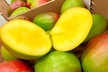
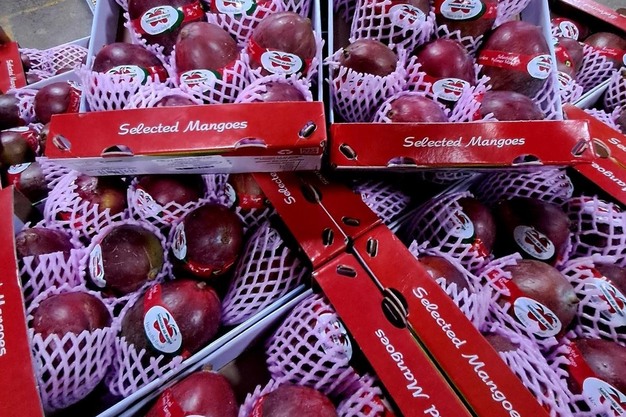
The Brazilian mango industry is facing a difficult start to the year due to heavy rains in the São Francisco Valley, the country's primary production region. "Approximately 60% of my harvest was destined for the domestic market due to quality concerns," stated Ronaldo Araujo, CEO of Sebastião da Manga.
According to Araujo, the rain primarily affected the fruit's external quality, emphasizing that the issue was not quantity but exportability. "We experienced significant losses because of the rain, leading us to focus on the local market to avoid client problems," he said. In Brazil, consumers are more tolerant of mangoes with minor imperfections, which helped us temporarily redirect the fruit.
 © Sebastiao da Manga
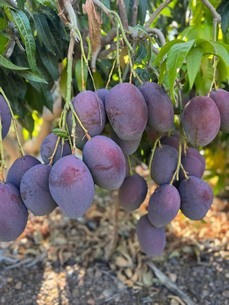
The São Francisco Valley, responsible for 90% of Brazil's mango exports, has been hit the hardest by the weather. Araujo notes that the greatest risk has been anthracnose, a disease that occurs when preventive treatments cannot be applied properly due to rain. Even so, the businessman remains optimistic: "From June onwards, 100% of our mango will be free of issues, and we will return to normal export volumes".
 © Sebastiao da MangaThis development aligns with the decreased availability of Mexican mango in the global market, creating an opportunity for Brazil. "Mexico's production is lower this year, and anthracnose issues are also affecting supply. That's why the United States is sourcing produce from Brazil to load in May and June," Araujo stated. The rising demand in North America might result in higher prices.
"Currently, smaller sizes (9, 10, and 12) cost around 7 euros CIF on average, while larger sizes are approximately 5.50 euros, mainly because of competition from South African mangoes," he said. Araujo forecasts unusual demand in June and July due to the Mexican fruit shortage, which could push European prices up by as much as 3 euros per box.
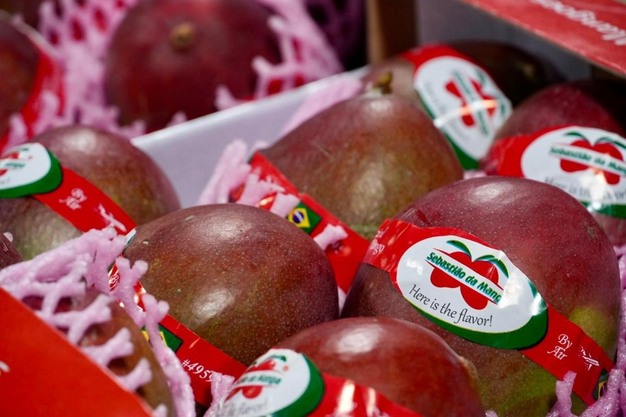
Brazil maintains its position as a year-round supplier thanks to its continuous production cycle, unlike other countries with more seasonal supplies, such as Peru or Ecuador. "Brazil is the only country that produces mango 12 months of the year; the others work in windows," the grower pointed out.
 © Sebastiao da Manga
Tommy Atkins and Palmer varieties still dominate Brazilian plantations, with Tommy Atkins being more sensitive to rainfall. "The Palmer mango is a little more resistant," he added.
The sector is optimistic that exports will recover in the second half of the year, supported by higher-quality fruit and more favorable weather. "We expect quality to be very good for export," Araujo stated.
 © Sebastiao da Manga
 For more information:
Ronaldo Araujo
Sebastião da Manga
Brazil
Tel: +55 21 98458 1439
Email: [email protected]
www.sebastiaodamanga.com