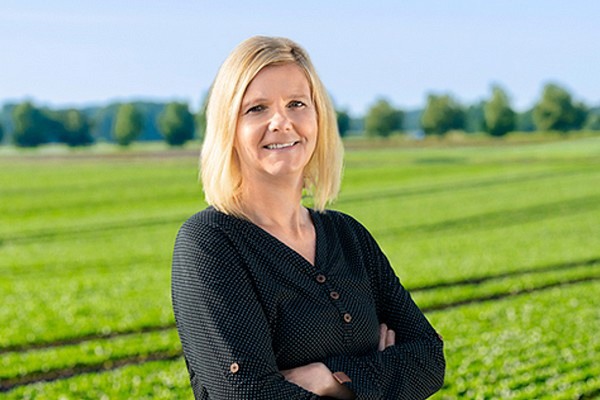
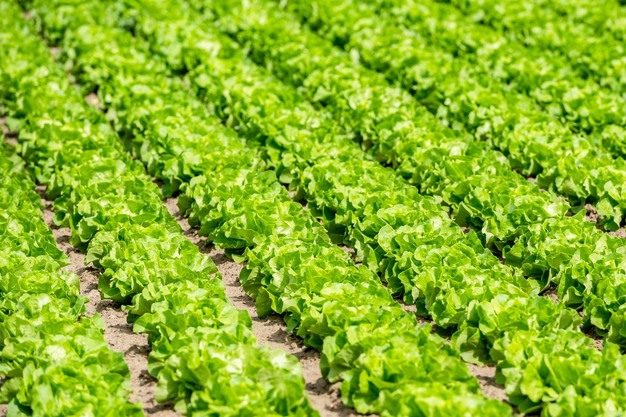
Supplies of German field-grown lettuce are gradually increasing. "We have already harvested our last Spanish lettuce and are now supplying our German produce," reports Christine Behr, Sales Director at BEHR AG. "Overall, the market is currently in transition, but Spanish lettuce continues to have a strong presence. This is because the rainy season in Spain caused planting delays of about three weeks. Once conditions were favorable again, several plantings were carried out simultaneously, and these are now ready for harvest. However, there are significant quality issues with the Spanish produce, particularly due to aphid infestation and powdery mildew, which severely compromise product quality."
 © BEHR AG/Thorsten Scherz
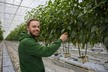
Christine Behr, Chief Sales Officer at BEHR AG
Slow start to the harvest in northern Germany
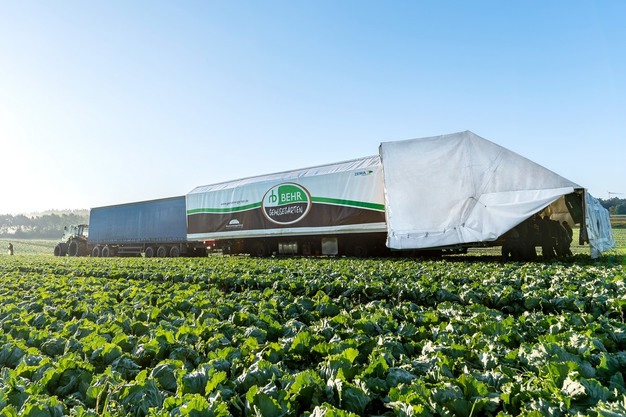
On the fields of the Hessian subsidiary Gemüse-Garten Büttelborn GmbH, this year's harvest got off to a good start as planned. In northern Germany, however, the start of the season has been somewhat slow for some crops due to cooler temperatures. "Unit weights are occasionally lower, but there is no sign of significant yield losses or higher costs."
 © BEHR AG/Thorsten Scherz
The Spanish season presented numerous challenges for all growers. Behr: "As a result, the food retail sector currently has a very high need to switch to German products as quickly as possible. This requires us to coordinate volumes precisely with our growers and the respective food retail partners." According to Christine Behr, competition in the German food retail sector remains significant, meaning that prices are under pressure even in the event of normal supply. "However, when there are surpluses, the situation can become dramatic in some cases!"
 © Hugo Huijbers | FreshPlaza.com
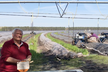
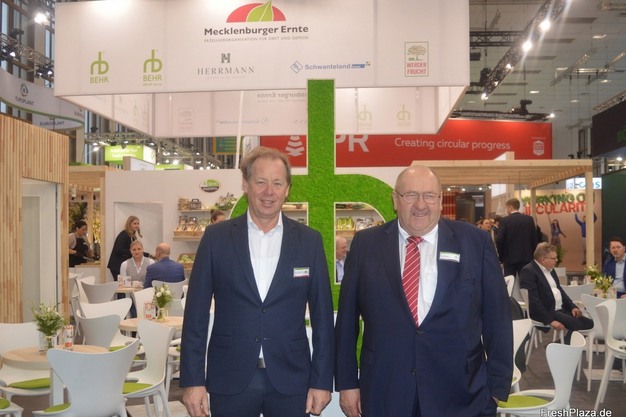
EO Mecklenburger Ernte and its marketing partner BEHR AG are among the largest suppliers of open-field vegetables to the food retail sector. Pictured: Hans-Jörg Elvers and Rudolf Behr at this year's Fruit Logistica.
Imported goods in the summer
Meanwhile, several long-term trends are emerging in the lettuce market. "It is particularly noteworthy that crops such as arugula, lamb's lettuce, and spinach are imported in large quantities from Italy even during the summer months. This, in turn, is because production costs are significantly lower there. For example, there is no minimum wage there, which is why Italian products can be offered on the German market at lower prices than domestic goods." In this context, reference is also made to price trends at the point of sale. "Statistically speaking, producer prices fell by about 3% in 2025. This is partly reflected in a corresponding price decline in the food retail sector. Nevertheless, the perception has taken hold among many consumers that prices have risen overall."
 © BEHR AG/Thorsten Scherz
Expansion of acreage for iceberg lettuce, broccoli, cauliflower, and organic vegetables
Although the total cultivation area for German open-field vegetables remains largely constant, declines in acreage are emerging for some crops. "Particularly labor-intensive crops are being increasingly reduced, as cost increases resulting from the minimum wage are not reflected in prices. In line with the increased demand from our customers, we have expanded our cultivation by approximately 200 hectares this year. This includes iceberg lettuce, broccoli, and cauliflower, but we have also increased our acreage for organic products. The latter segment continues to develop positively for us: We have added several new programs and expanded our organic cultivation capacities accordingly. Across our entire product range, we are constantly developing new products—after all, that is and remains our DNA," she concludes.
For more information:
Christine Behr
BEHR AG
Parkstraße 2
21220 Seevetal
Phone: +49 (0) 4185 79 77 - 381
[email protected]
www.behr-ag.com