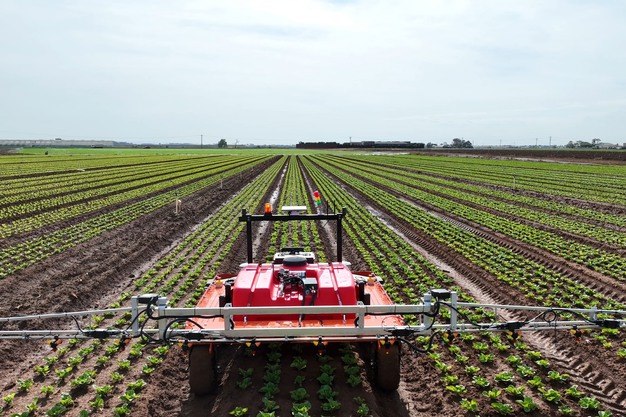
Labour shortages, rising input costs, and the complexity of existing autonomous systems are converging pressures on Australian farms, and for Dale Creed, product lead at FieldSense Robotics, they define the problem the FSR 150 is built to solve.
"We're looking at farms being under pressure on multiple fronts," Creed says. "Whether that's finding labour or sustaining labour, whether that's input costs rising, and also whether it's other autonomy in the market that is either quite expensive or difficult to acquire."
 © FieldSense Robotics
The FSR 150 is designed as a response to those constraints, with a focus on accessibility rather than high-end exclusivity. "We're essentially looking at an angle to support farmers, to help them manage labour, input costs, and also to have simplified autonomy that's cost-effective for their farming enterprises," he says.
That emphasis on affordability is deliberate. "We want to make sure that adoption is not just for the few but for every farm," Creed says. "It has to be competitive compared to what other autonomy is out in the market."
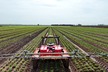
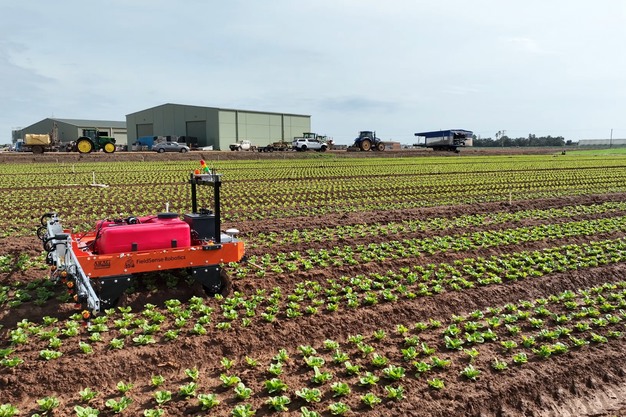
At launch, the system's primary role is spraying, a task Creed sees as a clear entry point for autonomy. "Our initial viewpoint is providing autonomy with general spraying," he says. "You would set up your paddocks, select the function, and it would go and do that traversal."
The system is designed to operate with minimal human intervention. "Once the tank empties, it will auto-recognise and go back to an auto-refill station," he says. "It can continue to operate until that master tank is empty."
 © FieldSense Robotics
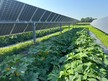
But spraying is only the starting point. A central feature of the FSR 150 is its modular design, allowing growers to expand its capabilities over time. "We look at our system as having a modular type of capacity so that it can run all different types of implements," Creed says. "It's an open architecture modular unit."
That means farmers are not locked into a single use case. "You could start with spraying and then integrate other functionality," he says. "At different points of the season or even different times of the week, implements can be interchangeable."
The aim is to create a system that supports farm workflows rather than replacing them. "We essentially see it as a support tool for farmers," Creed says. "When there are peaks in the season, and things don't get completed the way you would like, this is another function that can enable those tasks to be fulfilled."
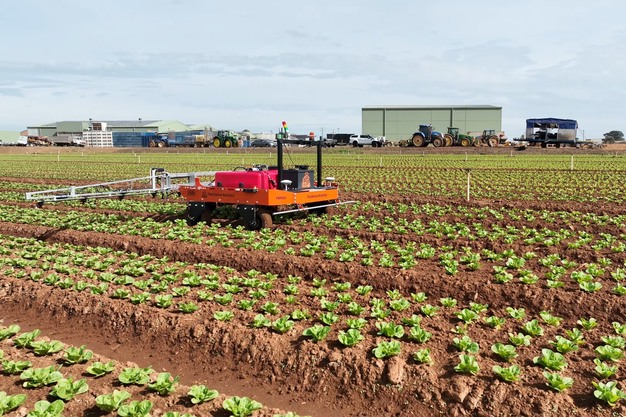
Alongside its physical tasks, the FSR 150 is also designed as a data-gathering platform. "It's not just about spraying," he says. "It will also be looking at crop health, productivity, and a number of other parameters."
 © FieldSense Robotics
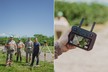
Using onboard sensors and cameras, the unit collects information on every pass through the field. "We're doing multiple functions on every pass," Creed says. "That gives better feedback to farmers so they can have an overview of what's happening in the field at any one time."
The technology underpinning the system draws on experience outside agriculture. "The team has been developing military-grade applications," Creed says. "We're looking at using similar technologies to get the best outcomes for farmers."
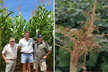
For Creed, the key is ensuring that capability translates into practical value on the farm. "My role is to work with industry to make sure it's aligned to what's required," he says. "It's about making sure the return on investment is there."
Early trials suggest the approach is resonating. "The initial use-case scenarios have been well received," Creed says. "Now it's about continuing to build that out, starting with spraying and then expanding into other tools that support the overall enterprise."