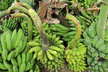
Brazilian banana exports increased in March following a slowdown in February. According to Comex Stat, around 7,000 tons were shipped, up 43% month-on-month. Export revenue (FOB) reached US$34.39 million, up 13%.
Uruguay was the main destination, accounting for 44.09% of exports, followed by Argentina at 30.67%, the Netherlands at 10.01%, and Portugal at 6.4%. The increase in volumes was linked to a recovery in Argentine demand after the holiday period in February. Lower supply from Paraguay also supported demand for Brazilian fruit, according to Hortifrúti/Cepea.
Brazil has also expanded availability, including higher-quality fruit, which has supported price positioning in export markets. Compared to March 2025, however, shipments were down 7.6%. Last year's higher volumes were linked to reduced output in competing suppliers such as Paraguay and Bolivia, which have since recovered production.
Brazilian supply was also lower in March compared to the previous year due to higher temperatures between December and January 2026, which accelerated fruit ripening.
For April, production of nanica bananas is expected to increase, particularly in northern Santa Catarina, a region with a high share of exports to Mercosur markets. Weather conditions, including humidity, rainfall, and higher temperatures, supported orchard development and are expected to increase supply.
With higher availability, prices for nanica bananas have started to ease, which may support export volumes. At the same time, increased production in competing countries may limit Brazilian shipments due to differences in logistics, including pricing, distance, and exchange rates.
Source: HF Brasil