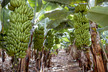
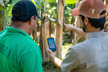
A new banana variety, Clarinha, has been registered in Brazil's National Registry of Plant Varieties (RNC) by the Ministry of Agriculture and Livestock (MAPA). The variety was discovered in the state of Santa Catarina and originated from a natural mutation of a banana from the Cavendish subgroup.
Clarinha is characterised by a lighter and shinier skin linked to a chlorophyll level approximately 43 per cent lower than conventional varieties. Tests show that the yield is comparable to that of traditional bananas. The variety also maintains its appearance during winter periods when standard bananas tend to darken more quickly.
According to Ivanor Boing, head of the regional office of the Ministry of Agriculture in Santa Catarina, registration enables commercial use and supports production in the region. The state currently has six identified banana varieties, with Luiz Alves and Corupa among the main producing areas.
Beyond Brazil, new plant and animal species continue to be identified in multiple regions. In China, a new freshwater shrimp species of the genus Macrobrachium has been identified in a nature reserve in the south-west, pending official confirmation. Researchers also recorded two fish species not previously documented in the park, Cophecheilus bamen and Paranemachilus chongzuo. Additional findings since June 2025 include a plant species, Styrax congzuoensis, a catfish species, and the plant Ottelia alismoides. Authorities plan to monitor populations and restore habitats.
In Indonesia, the National Research and Innovation Agency (BRIN) has identified three new plant species of the genus Homalomena on the island of Sumatra. The species, Homalomena pachyderma, Homalomena pulopadangensis, and Homalomena uncinata, were identified through ornamental plant trade activity on digital platforms.
In Chile, researchers from the University of Chile have identified four new bulbous plant species. These include Miersia nahuelbutensis, Miersia subandina, Gilliesia reflexa, and Gilliesia taguataguensis. The species are related to garlic and onion and were identified through fieldwork and morphological analysis. They are found in central regions including O'Higgins, Biobio, and La Araucania, in environments such as Andean slopes, forests, and coastal areas.
These developments reflect ongoing identification of new plant and animal species across multiple regions.
Source: TV BRICS