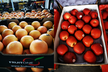
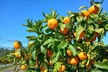
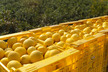
A report from the Valencian Association of Farmers (AVA-ASAJA), based on data from the Ministry of Agriculture and presented last week to the Commission and members of the European Parliament in Brussels, highlights that "EU trade agreements with third countries resulted in an 8.6% shift in market share of European citrus to foreign producers over the past decade (2015-2025). While the market share of EU-produced citrus decreased from 71.1% to 62.5%, imports from third countries, in some cases from over 12,000 kilometers away, rose from 28.9% to 37.5%. The most striking case is mandarins, where the share of European fruit plummeted by 18.9% in ten years, dropping from 80.5% to 61.6%."
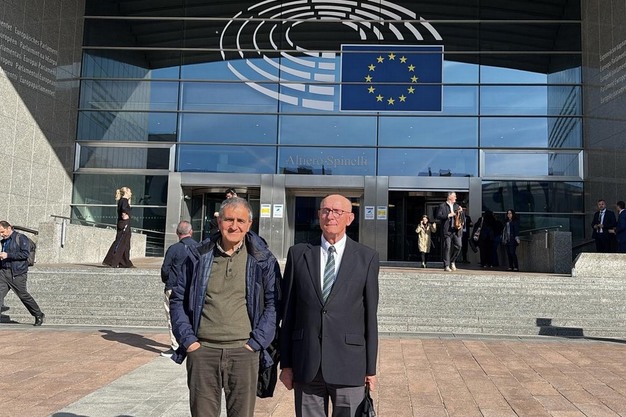 © AVA-ASAJA
Therefore, AVA-ASAJA urges the EU institutions to review all current trade agreements, particularly those with South Africa, Egypt, Turkey, and Morocco, as well as upcoming ones such as Mercosur. The goal is to ensure full reciprocity, meaning identical rules for both European and foreign products. They also call for a comprehensive and credible impact assessment on the agricultural sector, along with automatic and effective safeguard clauses to respond to price collapses at the source. Additionally, the organization requests inspections at origin, extended cold treatment procedures, and border closures to third countries unable to guarantee the safety of their shipments.
"Citrus imports in 2025 (up to October) reached 1,931,711 tons, marking a 4.5% increase compared to the same period last year and a 5.4% rise over the five-year average. In value, citrus imports to the EU surpassed 2,000 million euros for the first time. South Africa dominated shipments with 49.4%, followed by Egypt at 19.8%, Turkey at 6.5%, Morocco at 6.1%, and Argentina at 5.2%," AVA-ASAJA stated.
"Between September and November 2025, Europe imported 261,355 tons of oranges from South Africa, leading to decreased demand for the Navelina variety in Valencian and Spanish rural areas. Imports from Egypt from January to June reached 330,558 tons, coinciding with the availability of Navel and Valencia oranges. In the mandarin segment, 111,916 tons from South Africa, shipped between September and November, encroached on the market share of satsumas and early clementines from the Valencia Region. AVA-ASAJA previously reported during a visit to Brussels that, since the last treaty with South Africa, early Valencian mandarin production has dropped by 40% over ten years, being replaced in Europe by South African mandarins," the organization stated.
During its visit to Brussels, AVA-ASAJA highlighted concerns about the Mercosur treaty, which the Commission plans to apply temporarily starting May 1. "Mercosur could be the final straw for our citrus crop because the glass is already overflowing. Brussels refuses to see the devastating impact that the influx of juice from Brazil, the world's leading producer, and the elimination of tariffs on both juice and fresh produce will have on the sector. If the EU doesn't change its trade policy, the EU agriculture and livestock sectors will continue to lose market share and be replaced, to the detriment of producers and consumers," Cristóbal Aguado, President of the organization, stated.
 For more information:
AVA-Asaja
[email protected]
www.avaasaja.org