In an industry buffeted by geopolitical shocks, currency swings, and climate volatility, Costa Rican Melopen's answer is not to hedge through diversification into entirely new sectors, but to deepen its roots, investing in soil health, energy independence, biological inputs, and the people who make the operation work year after year.
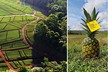
The company currently farms 320 hectares of melon and watermelon — with capacity for 450 hectares — on the Nicoya Peninsula in the province of Guanacaste, and exports around 350 containers per season. "We have no ambitions to grow beyond where we are," says Ocksan Aju, operations manager and second-generation member of the family business, which has been exporting since 1991.
That decision to consolidate rather than expand isn't complacency. It's hard-won wisdom from a decade of back-to-back shocks.
 © Melopen
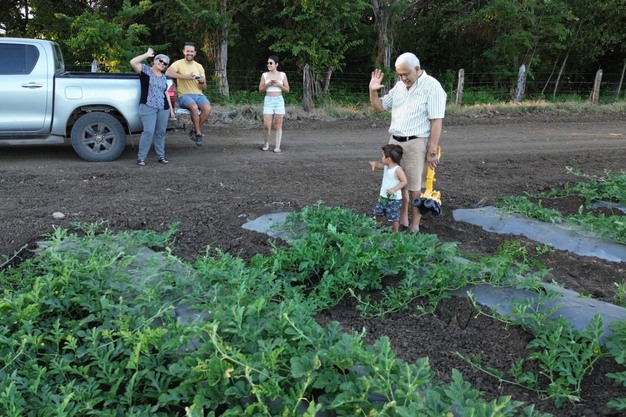
Family photo: Jenny Calvo (Ocksan Aju's mother), Ocksan Aju, his wife Yulissa Sandi, their son Tomás, and his father Fernando, founder and current general manager of the Costa Rican family business Melopen. "The generational transition is assured," says Ocksan Aju, operations manager.
Crises, one after another
COVID-19 hit at the worst possible moment, right when Costa Rican fruit was arriving in European markets. "30% of our fruit was not even harvested. All those investments were absorbed by the producer," Ajú recalls. A few years later, the war in Ukraine threw European port logistics into chaos. Containers were delayed, shipments were rerouted through multiple ports, and part of the production never got exported at all.
In 2026, a new geopolitical conflict is adding anxiety, particularly around freight surcharges, fertiliser supply, and seed availability.
On top of that, the Costa Rican colón has been appreciating rapidly against the US dollar and euro, reaching levels not seen in over 20 years. "Although we were able to increase the prices a little, this situation with the colón has erased these gains." It affects all Costa Rican exporters equally, but that's cold comfort. The impact is real and entirely outside anyone's control.
What they grow, and where it goes
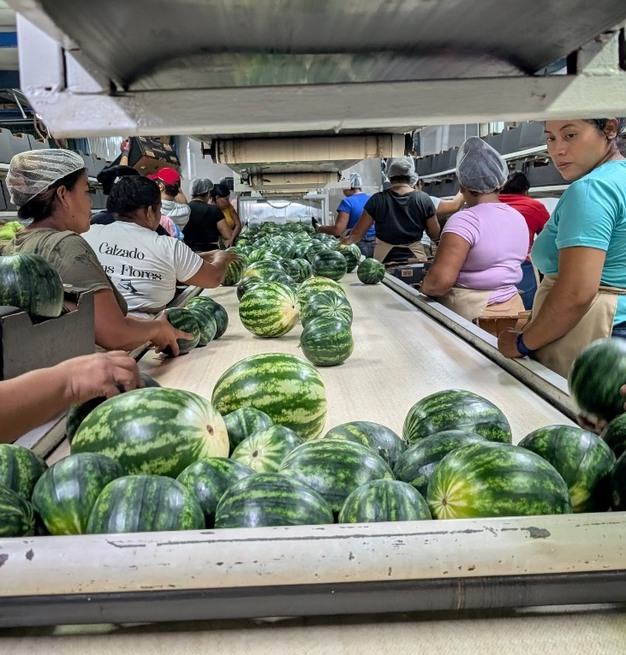
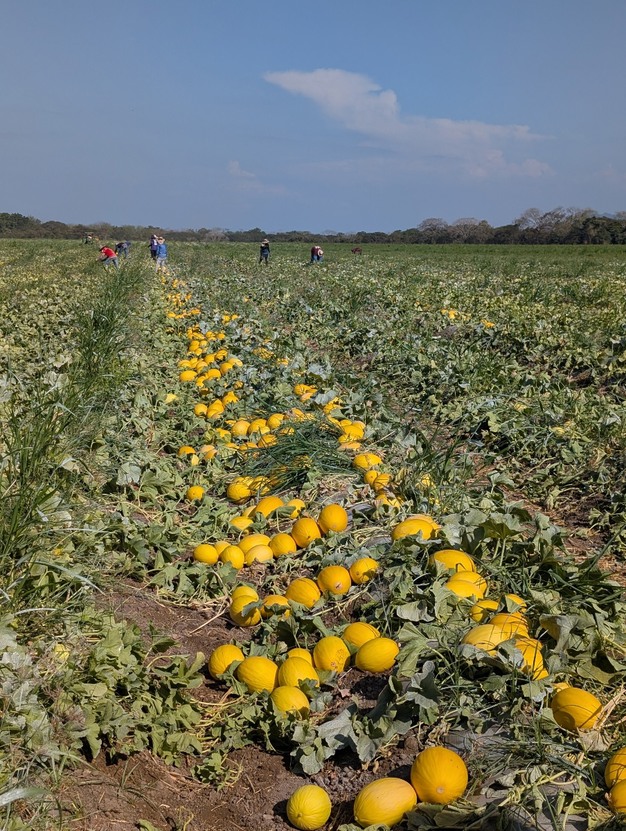
Melopen produces yellow Honeydew melons, a small volume of Hami melons — yellow and corrugated on the outside, orange in the inside — for the US market, and a broad range of watermelons, from seeded medium-sized fruit to seedless varieties in large, medium, and mini sizes, ranging from around 1 kg up to 12–14 kg. Watermelons account for roughly 70% of cultivated area, with melons taking up the rest.
 © Melopen
 © Melopen
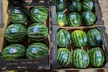
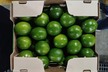
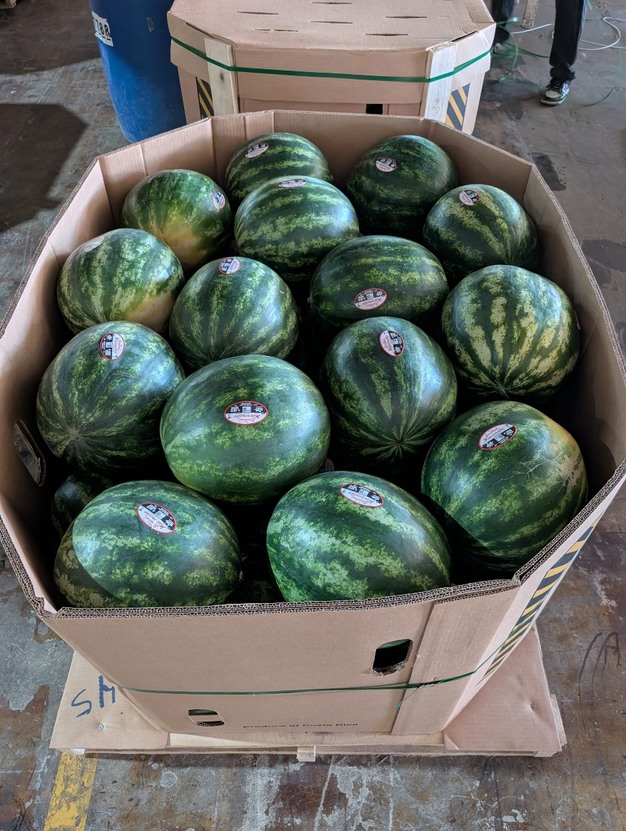
Medium seedless watermelons and XL seedless watermelons, in bins for the U.S. market
About 10% of production is sold domestically. Europe receives around 70%, and the United States takes roughly 20%. That balance has shifted considerably over the years. "When the company was founded, the entire programme went to the US. About five years ago, it swung to 100% Europe." Now the US is becoming relevant again, partly because viral diseases, spread by thrips and aphids, have hammered watermelon production across much of Central America more severely than in Costa Rica. "We are back being a good option for the United States, and also the market is getting good prices."
Geographic spread
The trend towards mini watermelons is unmistakable. Demand from European buyers for smaller formats has grown year on year, reflecting the reality of smaller household sizes across the continent.
 © Melopen
 © Melopen
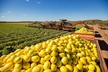
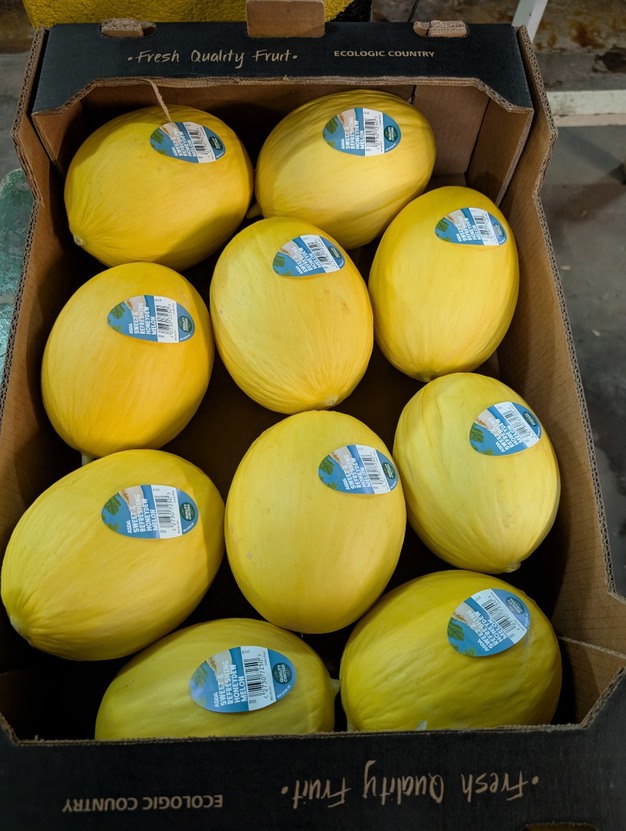
Honeydew melons
Reliable wins over cheap
Costa Rica's competitive edge in Europe comes down to timing and trust. Brazil has repeatedly tried to extend its season to encroach on Costa Rica's export window, but Ajú is unfazed. "Buyers in Europe have realised that Costa Rica is more reliable in our natural window than Brazil, trying to force a new window." The last two seasons have been notably stable — in both prices and demand — which he reads as a sign that Costa Rica is re-establishing itself as a trusted supplier.
The increasingly strict requirements of European MRL regulations, once seen as a burden, have become a structural advantage for a company that in recent years has focused on reducing its dependence on agrochemicals.
The Biofábrica: biology over chemistry
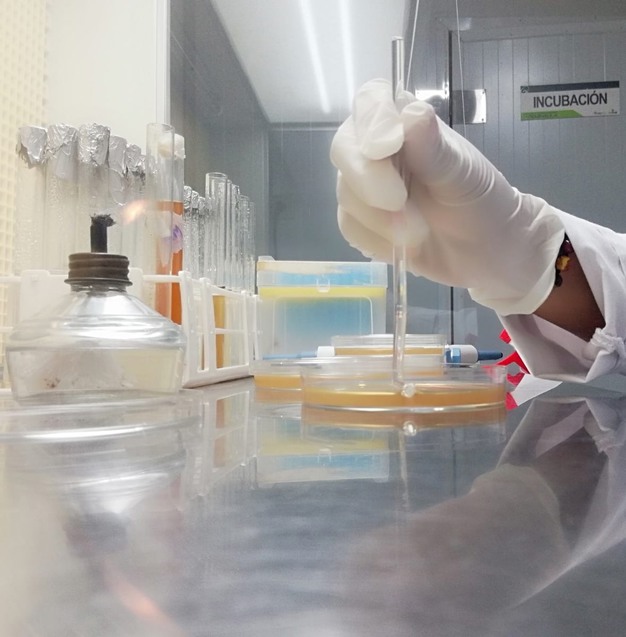
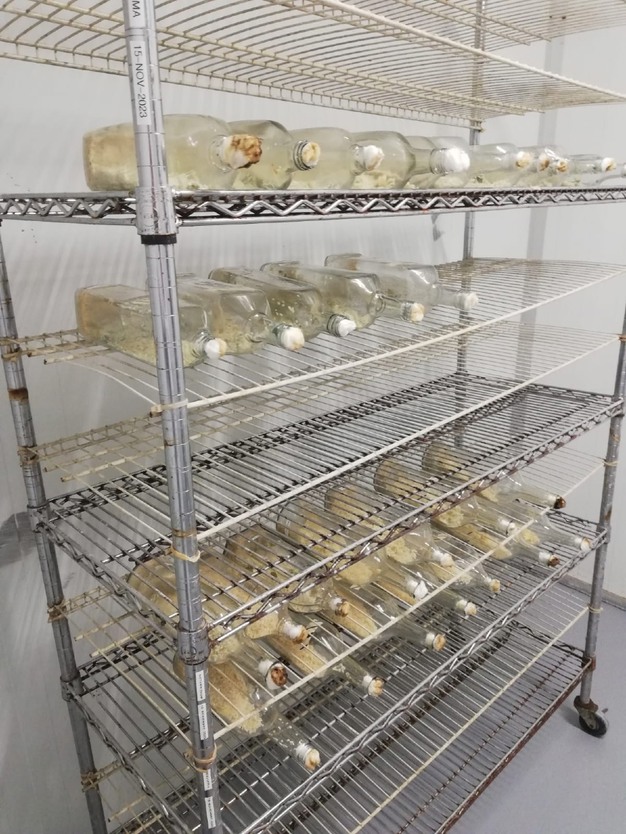
Perhaps the most distinctive thing about Melopen is what happens in its in-house laboratory, which the company calls the Biofábrica. For roughly a decade, the team has been cultivating and reproducing microorganisms, both fungi and bacteria, for direct use in the fields. The results are striking. "We have reduced 100% of the agrochemicals we apply to the soil."
 © Melopen
 © Melopen
Quality analysis in the laboratory and reproduction of fungal cultures
The lab started with commercially available biological agents, which it reproduced, and has progressively developed its own capacity to isolate microorganisms collected directly from the farm. The next step is reproducing beneficial insects for biological control.
Beyond the lab, Melopen produces biochar from sawdust generated by its own pallet-making operation, composts excess watermelon material, and uses cover crops — particularly Crotalaria, a fast-growing legume that fixes nitrogen and attracts pollinators — during fallow periods, in order to reduce the use of herbicides.
Melopen was, by its own account, the first company in the region to export certified organic melons and watermelons to the EU. The programme was eventually discontinued: no buyer was willing to pay the premium that justified the cost. But Ajú believes the market for fully certified organic produce is likely to become commercially viable again.
Sun-powered independence
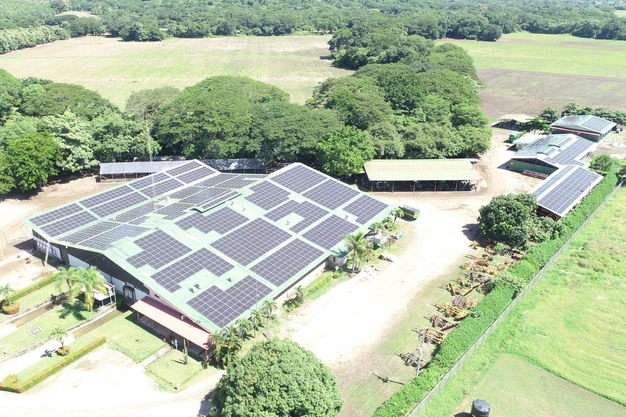
A parallel investment has been in energy. Through a financing partnership, Melopen has installed solar panels on its packing centre that now cover 70% of the farm's electricity needs. For Ajú, this is about more than cutting costs. "This gives us cost efficiency and also a certain feeling of independence. If petroleum rises above $100 and energy becomes crazy expensive, we are trying to make our company as safe as possible from these external factors."
 © Melopen
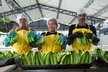
At peak season, Melopen employs around 300 seasonal workers alongside approximately 50 permanent staff. The company is currently investigating harvesting assist systems: conveyor belt setups linking tractor to trailer, with shade canopies for workers in the field. The goal isn't purely efficiency. "We think about not only reducing the number of people, but also improving their conditions."
The road to the port
One structural problem that no amount of in-house innovation can fix: the state of the roads between Guanacaste and the Atlantic port of Limón. Transit times that once ran at 8 to 10 hours have stretched to 12 to 14, due to deteriorating bridges and serious disrepair on key stretches. It's a sector-wide issue, but it adds real cost and risk to every shipment that leaves the farm. For a company that has spent a decade building resilience from the inside out, it's a reminder that some things remain stubbornly out of reach. "It's not just the road from Guanacaste to Limón — it's the country's infrastructure as a whole. The port of Limón was modernised, but prices went up, and Caldera is a port that limits the export of domestic production to Asia and the US West Coast," says Aju.
Melopen — the name is a contraction of "Melones de la Península" — holds several certifications, including GlobalG.A.P., SMETA (four pillars), and local Costa Rican standards Bandera Azul and Esencial Costa Rica.
 For more information:
Ocksan Aju
Melopen
San Pablo, Nandayure (Guanacaste) – Costa Rica
Tel.: +506 26 858500
[email protected]
www.melopen.com