 © Thijmen Tiersma | FreshPlaza.com
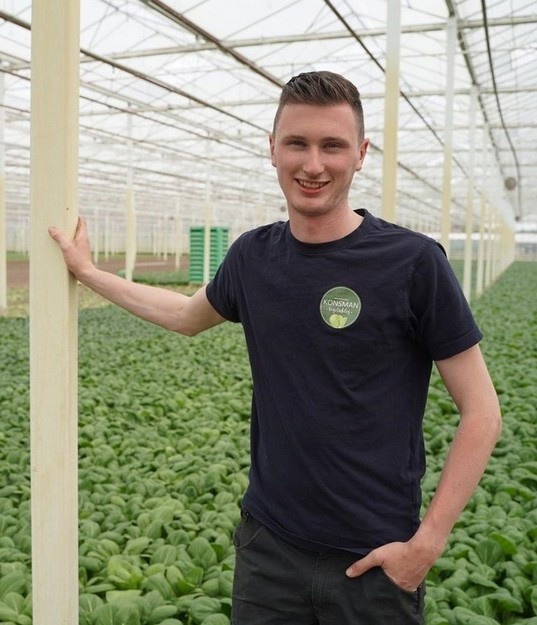
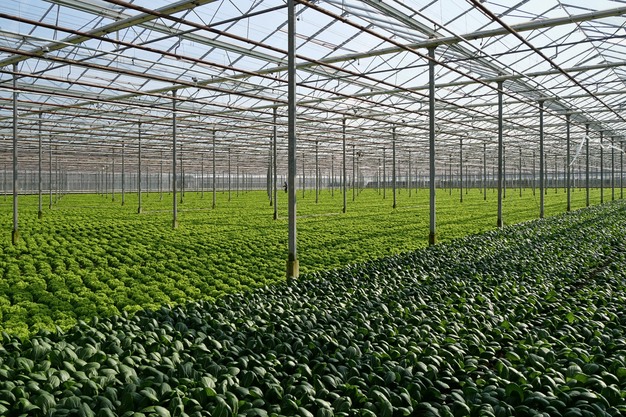
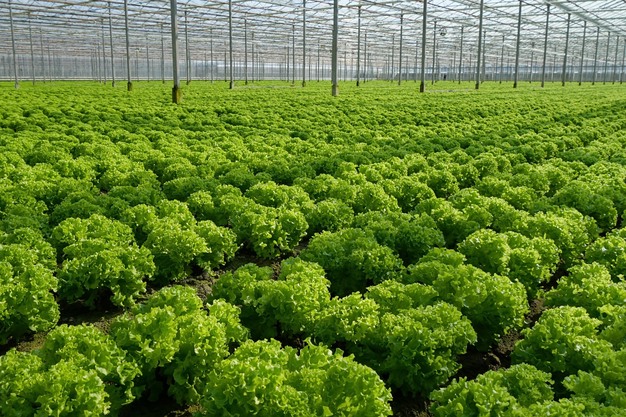
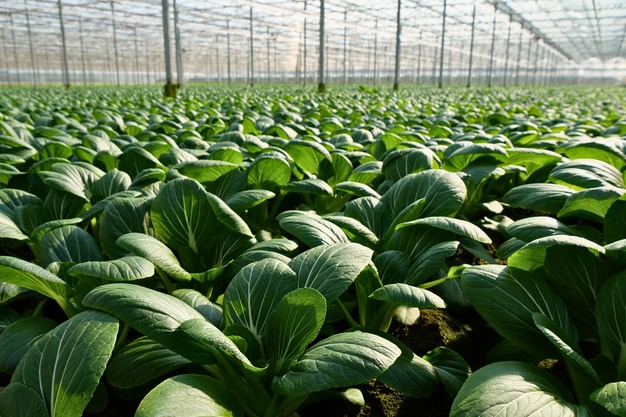
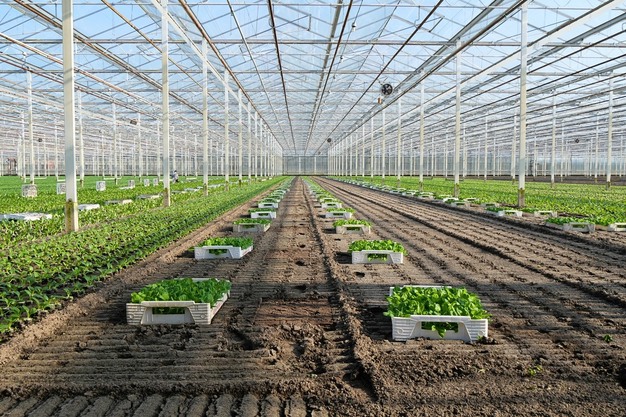
In the Netherlands, greenhouse grower Robbin Konsman in Monster (Westland region) continues to expand and adapt his business in response to changing conditions in crop protection and market demand. Over a relatively short period, the young entrepreneur has acquired two greenhouses and converted them for the production of leafy greens, herbs, and Asian vegetables.
His next step is the installation of insect netting at his five-hectare site on Boomaweg. The system will be applied across the entire area. "I am convinced that every challenge eventually has a solution," Konsman says.
Unique with netting
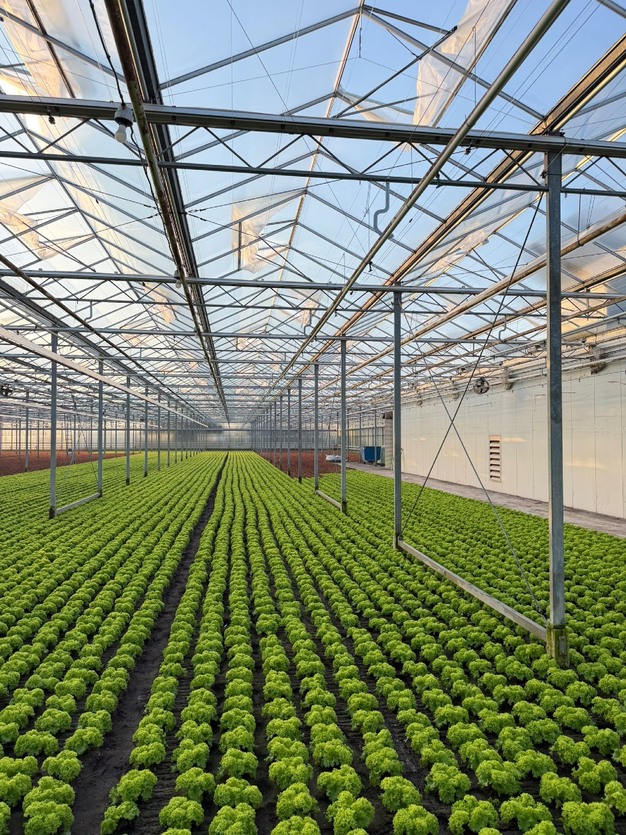
The investment is both a necessity and an opportunity, according to Konsman. The available crop protection toolbox has been shrinking steadily, making pest and disease management increasingly difficult. He grows a range of lettuce varieties, herbs, and Asian vegetables, and in some of those crops, the effective products that were once available have since been withdrawn.
Biological alternatives exist, but in his experience, they do not always perform reliably. Controlling aphids in pak choi, for example, has become a growing challenge, with no approved corrective products remaining for that crop.
 © Konsman Vegetables/Thijmen Tiersma
The situation Konsman describes is familiar to many in the sector. He also sees outdoor growers facing the same pressures — often to an even greater degree. "I think I will soon be one of the few growers cultivating leafy vegetables under insect screens," he says. His crop advisor confirms that assessment. Having his own greenhouses gives Konsman the flexibility to make this investment. Many of his peers, including fellow greenhouse growers, either do not have that option or are not willing to commit to the outlay at this stage of their careers.
Konsman chose the Simplefold insect screen system from Huisman Scherming. With the screens installed, he expects to exclude the majority of pest insects from the greenhouse, reducing the need for interventions. "That makes my cultivation even more sustainable. I see the investment in insect screens as a way to differentiate myself. I want to guarantee that my products are aphid-free, through a sustainable growing approach with minimal use of crop protection products."
 © Konsman Vegetables
Peak demand in winter
His greenhouse production gave him a competitive edge over imported products from Spain during the winter season. Trade was initially sluggish in November and December, contracts held up, but customers were not placing the additional spot orders typical of previous years. From January onwards, however, demand picked up sharply before easing again in the weeks that followed.
The reason was straightforward: severe weather in Spain had affected many crops there. Konsman used to monitor Spanish weather closely and would act immediately when conditions turned poor. He still keeps an eye on developments, but no longer obsessively so. "I usually find out quickly enough from my order volumes when there are problems there," he says.
 © Konsman Vegetables
Developing as an entrepreneur
As his business has grown, Konsman has recognised that he can no longer manage everything himself. He has brought in external partners and is developing his business management skills through a programme run by Westland Accountancy. Ivan van Niel, the former grower from whom he purchased and converted a tomato greenhouse several years ago, serves as a sounding board, alongside his father.
On the crop side, he works with crop advisor Ilse Leenknegt of the Research Station for Vegetable Growing. Together, they recently visited a fellow grower trialling hydroponic lettuce production. Konsman is not yet ready to make that transition himself; he still sees significant potential in soil-based cultivation and has several suitable locations for it. That said, he intends to consolidate his activities at a smaller number of larger growing sites, and is already looking at hydroponic options with an eye to the future.
 © Konsman Vegetables
New plans
His current assortment already includes some varieties originally bred for hydroponic production, which showed good resilience during periods of extreme summer heat. He is also evaluating varieties for outdoor cultivation, with aphid-resistant variety trials planned, alongside trials to assess whether he can expand his range with new crops such as iceberg lettuce, Romaine lettuce, and frisée. "I think it is going to become increasingly difficult to grow leafy vegetables aphid-free in open field production. For me, that is an opportunity to bring certain crops into the greenhouse."
Despite a quieter spell in the market, Konsman remains full of ideas. By delegating tasks and organising his business more efficiently, he is creating the space to think ahead and to look beyond his own operation. "I enjoy doing that. It gives me energy, and I'm increasingly aware of how important it is to keep finding pleasure in your work."
 © Konsman Vegetables
For more information:
Robbin Konsman
Konsman Vegetables
[email protected]
www.konsman-vegetables.nl