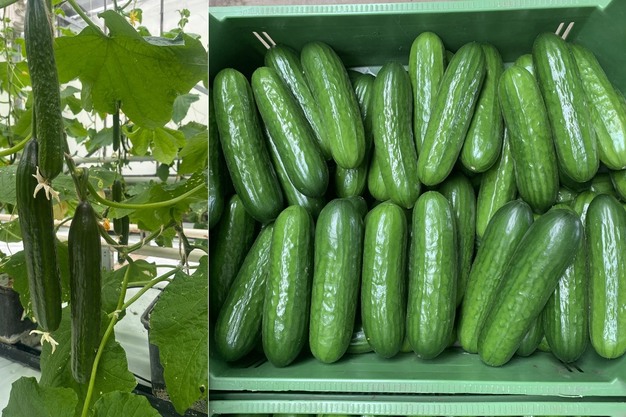
The vegetable harvest in Nuremberg's Knoblauchsland is now gradually picking up steam: "Just like in previous years, we're already harvesting mini cucumbers, regular cucumbers, and radishes in our greenhouse, but we're also starting to harvest chives in the tunnel and, in a few days, the first spring onions," explains Stefan Seischab, vegetable grower and owner of the family business of the same name. He notes that the quality of all crops has been consistently good so far.
 © Gemüsebau Seischab
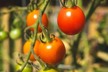
Cucumbers and mini cucumbers
Good growing and market conditions for chives
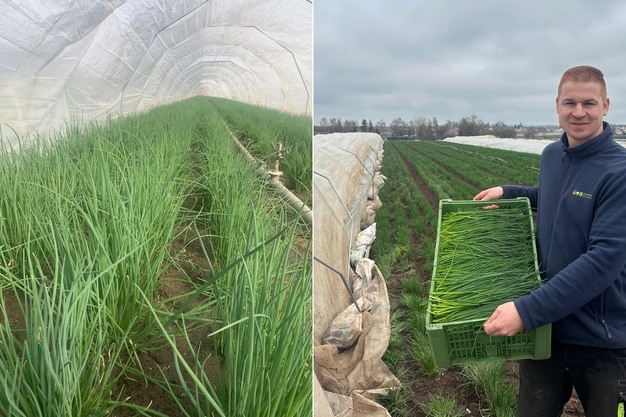
Chives in particular have grown very well this year, Seischab continues. "We've had almost nothing but sunshine over the past two weeks, and apart from a few days of slightly sub-zero temperatures, no more severe frost. During the day, the temperature sometimes rose to around 20 degrees, after which it got a bit colder again at the start of week 12. All in all, however, we currently have optimal growing conditions. Another advantage was that the abundant rainfall contributed to high soil moisture. This, in turn, meant that we didn't have to irrigate our tunnel-grown chives this year, which is actually rather unusual."
In terms of marketing, the early chives are also performing well. Seischab: "The price is slightly above last year's level, but in my view, it could be a bit better. Nevertheless, we can operate quite profitably with the current prices. We have the advantage of being one of the few regional suppliers in the early season, and currently, imported goods from Africa are also being offered at relatively high prices."
 © Gemüsebau Stefan Seischab
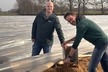
Stefan Seischab grows chives, among other crops.
Greenhouse radishes remain an attractive crop
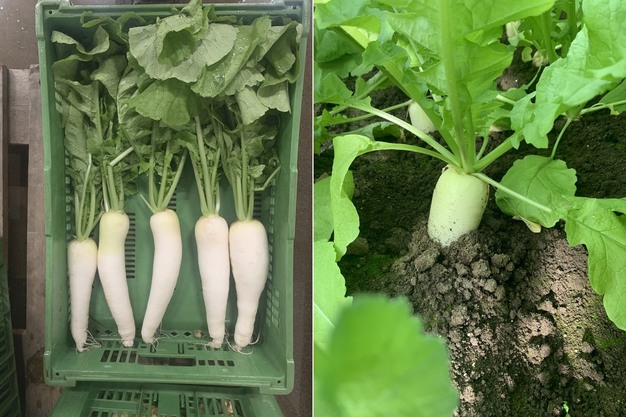
Greenhouse radishes are also among the classic harbingers of spring in the Nuremberg Knoblauchsland region and have proven themselves as an attractive crop over the years. "However, as soon as the open-field season really gets going, the market is usually quickly saturated." Nevertheless, Seischab takes a two-pronged approach here, harvesting both greenhouse-grown radishes (starting in week 18) and direct-sown radishes (starting in week 21) following the greenhouse harvest.
 © Seischab Gemüsebau
The first radishes of the season
Minor frost damage to spring onions
The first Franconian spring onions of the season are expected to be harvested by the end of week 12. "Initially, we'll bundle produce exclusively for the Nuremberg wholesale market, followed two weeks later by the first deliveries to retail stores." Here, too, the outlook is positive, according to Seischab. "Nevertheless, this year's winter was quite harsh, so we had to accept frost damage affecting up to 20 percent of the first crop." Marketing prices are generally based on those of Palatinate spring onions, though imported goods from Egypt and Italy are also currently available.
Expansion of rhubarb acreage
The rhubarb harvest is also imminent: "We'll be able to harvest the first stalks at the end of March," says Seischab, who specializes in growing the two varieties Goliath and Holsteiner Blut. Rhubarb is mainly available alongside the asparagus season until St. John's Day on June 21, with demand on the rise. "Rhubarb is very well received in the fresh produce market, so we have slightly expanded our cultivation capacity this year from 2 to approximately 2.4 hectares. We have even received inquiries about growing rhubarb for juice, but that is out of the question for our operation at this time."
 © Gemüsebau Stefan Seischab
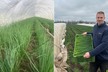
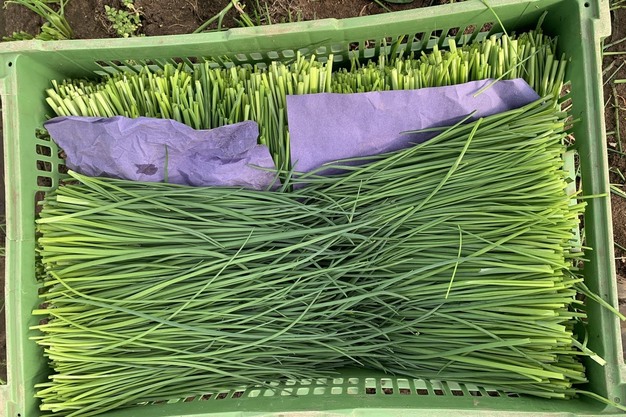
Marketable chives
Reduction in product variety
The Seischab farm has always adapted to the changing needs of the market and sells part of its produce through Franken-Gemüse eG and part on the open market. "Until 10–15 years ago, my father was still growing around 25 different crops; now it's just over half that. This year, for the first time, we will no longer grow any open-field lettuce apart from endive, for two reasons: on the one hand, growing lettuce in open fields is extremely risky; on the other hand, we are seeing declining demand in the regional restaurant industry. Our goal is to gradually reduce crop diversity even further in the coming years, but to grow larger quantities of each individual crop instead."
The focus here is on crops that can be mechanized in the future. "We have already succeeded in doing this with leeks, and we are also relying on mechanical harvesting for dill and parsley. Compared to manual harvesting, we have thus been able to double our harvest yield for parsley. Chives, on the other hand, are more difficult to mechanize; the cleaning work we would have to do after mechanical harvesting would simply be too labor-intensive," he concludes.
For more information:
Gemüsebau Stefan Seischab © Hugo Huijbers | FreshPlaza.com
Am Knappsteig 41
90427 Nuremberg
T: +49 911 936910
e-mail: [email protected]
www.seischabgemuese.de