Just a few weeks before some peak consumption periods, such as the run-up to Easter, the mini vegetable segment is once again at the center of international trade. The increasingly structured demand requires regularity, homogeneity, and annual planning. Manuel López Herrera, manager of Sweet Veggie's Dutch office, talks about the sector's development and the challenges involved in producing mini vegetables on a continuous basis.
 © Sweet Veggie
Mini vegetables are no longer a niche product.
"We are seeing a clear consolidation. For years, the segment was closely linked to haute cuisine, but today there is a more structured and constant demand," says Manuel López. "The products are no longer mainly used for visual differentiation on the plate; it's a category with real culinary value. Products with texture, a defined flavor, and versatility, which allow us to deliver better presentations, reduce wastage, and ensure consistency."
"The demand for mini vegetables continues to consolidate both in the domestic market and in the main European markets, especially in the Horeca channel and in specialized retail, where differentiation, regularity, and the product's visual quality are appreciated," he says. "We work with national and international clients, adapting formats, sizes, and presentations to the specific needs of each market."
Different production areas to be able to have a year-round supply
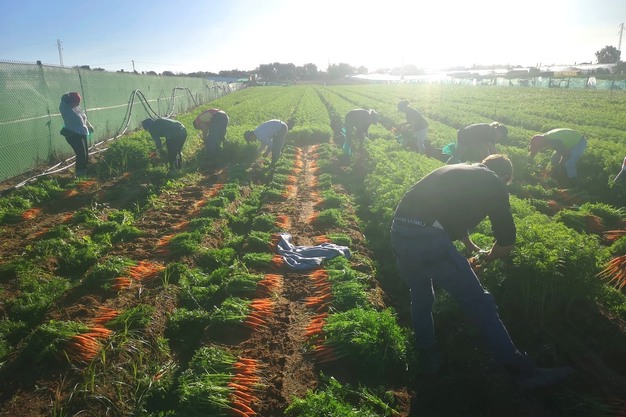
According to Manuel López, from a production point of view, this consolidation has created a need for regularity. "The market doesn't work on the basis of isolated seasons; it requires continuity. In order to be able to produce mini vegetables all year round, it is necessary to work in different production areas, depending on the time of year, and have accurately adjusted schedules."
Sweet Veggie grows its mini vegetables in Andalusia during the winter months and in Castile-La Mancha in the summer. "Sweet Veggie's agronomic planning is based on a technical program developed after years of trials in different production areas, which guarantees continuity and homogeneity in supply throughout the year. Schedules, varieties, and cultivation techniques are adapted according to the season and location," he says.
 © Sweet Veggie
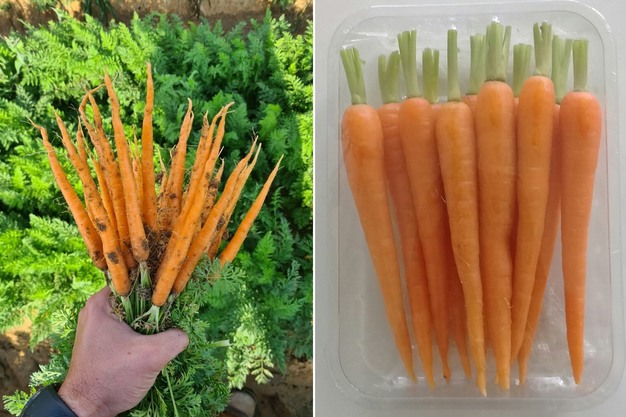
Mini carrots are still the main product, but the range is growing.
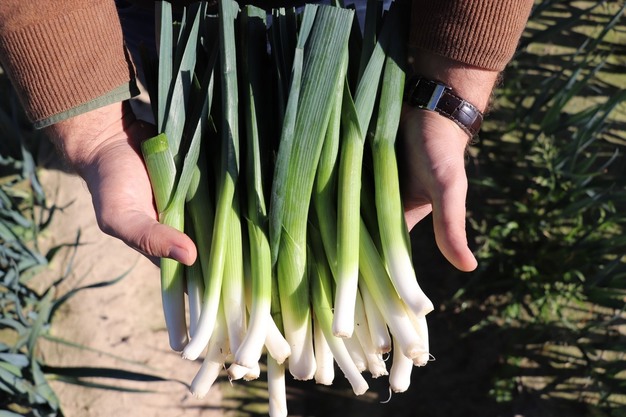
"Orange carrot is at the core of our business, and the rainbow ones provide differentiation. But new lines are being introduced, such as mini fennel, mini leek, mini beetroot, turnip, and even mini zucchini," says Manuel López.
"This expansion of the range is facilitating the category's consolidation and allowing us to meet different customer profiles," he says. "Also, even though the Horeca channel still plays an essential role in the business, we are increasingly present in European supermarkets. The segment's gradual entry into the retail market could drive structural growth in the coming years."
Transport from Spain reduces logistical costs and environmental impact
Manuel López says that by producing in Spain, Europe can be supplied exclusively by land transport, which significantly reduces the environmental impact compared to other suppliers that depend on air freight, especially in certain African areas.
"We compete mainly with South African mini vegetables. These are labor-intensive products, so their lower labor costs give them an edge; however, South African products have higher transport costs due to the fact that they are shipped by air, and they also have a greater environmental impact," he says.
"Besides, we have also integrated sustainability criteria into our production model, optimizing the use of water through efficient irrigation, and adjusting fertilization based on soil and plant analyses. In a context in which sustainability can determine purchasing decisions, this smaller logistical footprint is a factor that is increasingly valued by clients," says Manuel.
 © Sweet Veggie
Varietal development is key in mini vegetables
Sweet Veggie is working on R&D&I programs together with seed companies to have varieties adapted to the mini format, as these are more tender because they are harvested very early. "It's not simply a matter of selecting smaller sizes, but also of developing materials that ensure stability in terms of size, color, and agronomic behavior at different times of the year," says Manuel López.
"In the coming years, our work will allow us to improve uniformity, optimize yields, and guarantee that the product meets the standards required for export," he says.
Where is the mini segment heading?
The market is small and therefore very competitive, although there are not many companies involved, according to Manuel López.
"This segment is moving towards greater professionalization. Differentiation is no longer achieved only with the small size, but also with the capacity to produce constantly, homogeneously, and with annual planning. The key is not to produce a mini vegetable on a one-off basis, but to be able to do it all year round, meeting the same standards in January as in July," says the mini vegetable expert. "There are few companies like Sweet Veggie, with the technical capacity and flexibility necessary to obtain high-quality products."
 For more information:
Manuel López-Herrera
Sweet Veggie (Netherlands Office)
Tel.: +31 653751266
[email protected]
www.sweetveggie.es
Enrique Parias
Sweet Veggie (Spain)
Tel.: +34 663267919
[email protected]
www.sweetveggie.es