The 2025/2026 Spanish Fino lemon season is drawing to a close right before the arrival of the Verna, which will be harvested from April to the end of June, and whose production is expected to fall by 25-30% compared to last year's. This year, Spanish lemons have grown to remarkably large sizes due to the constant rainfall, and they have taken up more than 90% of the market share in Europe due to the limited Turkish production.
The 2025/2026 Fino lemon season started a little later than the previous one, although at normal dates, in early October. Although estimates pointed to a slightly smaller lemon production than the previous one due to the lower number of fruits per tree, the fruit's larger size could eventually result in the total volume being similar to that of the 2024/2025 season.
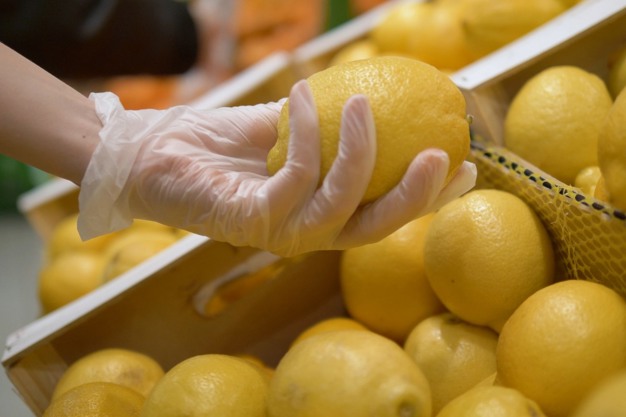
The constant rainfall in the main lemon-producing areas in Spain has resulted in an abundance of large sizes. "This should not be a problem for consumption, as the fruit still has the same healthy nutritional properties," says José Antonio García, director of Ailimpo. "The whole value chain, from suppliers to retailers, must have the capacity to adapt to such circumstances that depend so much on the weather. To do so, we have to be creative and consider different formats and presentations. We have a shared responsibility to ensure lemon consumption is maintained."
Besides their size, José Antonio García highlights the "exceptional" visual quality of the lemons this year. "In the 2024/2025 season, a lot of damage was caused by thrips, and the fruit suffered cosmetic defects. This season, the growers' efforts, the AGEFIS project promoted by Ailimpo, and the weather conditions, with more rain and cold, have resulted in the best quality in the last 10 years."
Given the sharp drop in lemon production in Turkey due to the impact of frosts in the spring of 2025, Spanish lemons have massively dominated the European markets, with a share of more than 90%, according to the director of Ailimpo.
"This season, nine out of every ten lemons consumed in Europe are Spanish. This has allowed a profitable price range for both growers and marketers, and the sector has been able to pass on the increase in production costs brought about by the war in Ukraine without consumers suffering," says José Antonio García.
So far, there has been a healthy tension between supply and demand, with supply slightly below demand. "This has resulted in a more stable and linear price throughout the year, which has kept consumption smooth. Also, class 2 fruit has had a good commercial outlook and reached interesting prices," he says.
Regarding the current war in Iran and the logistical problems it has caused in the Persian Gulf countries, José Antonio García says that Spanish lemon exports to these markets are very insignificant. "We are trying to determine the collateral impact this could have for us in the off-season, which would depend on the problems South Africa might have in arranging its shipments to Europe. We don't yet know anything for certain."
The Fino lemon campaign will come to an end in late March and be immediately followed by the Verna, whose production is expected to amount to around 290,000 tons. This is between 25 and 30% less than in the 2024/2025 season, when production exceeded 400,000 tons; a record-breaking volume. The Verna campaign will also be marked by larger-than-usual calibers and high prices at the source.
 For more information:
AILIMPO
C/ Villaleal, 3
30001 Murcia, Spain
Tel.: +34 968 21 66 19
[email protected]
www.ailimpo.com