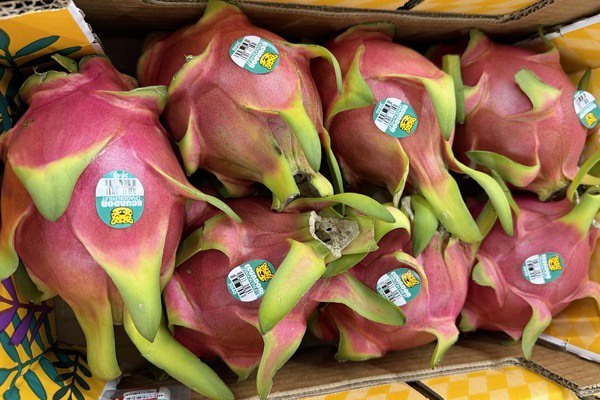
The volume on imported dragon fruit is relatively stable. "It is winter–a rainy, wet season–in Ecuador at the moment, so we're currently emphasizing quality when procuring fruit so we do not have quality issues upon arrival," says Anthony Shoghi, director of operations for Moonland Produce. "Compared to last year there is nothing out of the ordinary. However the last few years we've had supplies tighten considerably during April so we are keeping an eye on that this month."
 © Moonland Produce
The company, which also ships malanga, yuca, and small taro, is mostly focusing on the development of white and yellow dragon fruit markets, though within the last year, growers in Ecuador have been promoting red flesh varieties that are available by air shipments at the moment. The viability of red flesh varieties by ocean shipments is still being studied and tests are ongoing.
Right now, the company is sourcing its white dragon fruit from farms in the Manabi region of Ecuador, a country that does provide fruit year-round though volumes fluctuate depending on weather, size curve, harvest times and more. "This province along the Pacific coast of Ecuador provides near perfect weather conditions for growing dragon fruit because of the fertile soil and arid climate," says Shoghi.
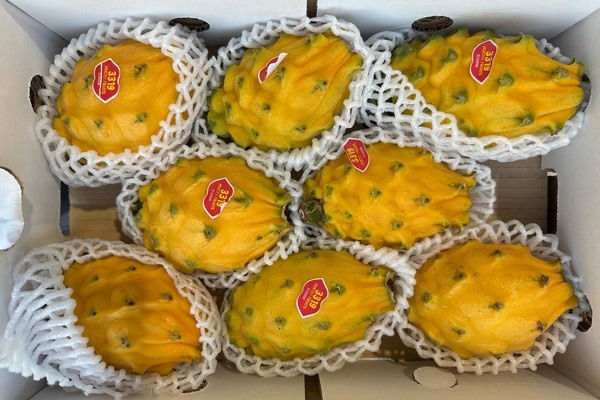
As for its yellow dragon fruit, it is sourced from the Palora region in southeast Ecuador. This is located in the Amazonian foothills which provides ideal climates of high humidity and volcanic soil to grow yellow dragon fruit.
Demand, price and quality
How about demand? "There is a robust demand for dragon fruit right now. Everyone along the chain–growers, shippers, importers, retailers–have done an incredible job developing the commodity and I think that will continue," says Shoghi. "I believe as more people are exposed to dragon fruit and its benefits, so long as it is provided at an economical price and in good quality, there is no ceiling for this fruit."
 © Moonland Produce
That said, the biggest challenge today for importers like Moonland Produce, which has been importing dragon fruit from several countries by air and sea for over 10 years, is the oversupply issue which devalues the commodity. "Then everyone realizes quickly there isn't enough money to go around for everyone to continue doing business in it. Oversupply also leads to future quality problems because growers are not incentivized monetarily to maintain their farms and quality suffers," says Shoghi.
All of this is leaving pricing right now relatively stable.
Looking ahead, consistent volumes are expected in the next few weeks. However, if a higher percentage of fruit with quality issues emerge at the farm level, then that will drive the market price of fruit higher because there will be less export grade fruit available.
 For more information:
Anthony Shoghi
Moonland Produce
Tel: +1 (323) 282-4004
[email protected]
https://moonlandproduce.com/