The preferences for grape packaging are changing, as sulfur pads come with concerns around residue management, says Dr. Moturu, CEO and Co-Founder of fresh produce packaging manufacturer PeelON.inc: "The grape export market is undergoing a shift toward cleaner and more sustainable post-harvest solutions. Retailers in the U.S., Europe, and India are increasingly sensitive to chemical residues, packaging waste, and worker safety. While sulfur pads have long been used to control fungal growth during transit, concerns around residue management, handling exposure, and packaging complexity are driving the search for alternatives. At the same time, exporters are under pressure to maintain long storage life and consistent quality during extended sea shipments. The market is now looking for solutions that can preserve freshness without relying on chemical additives."
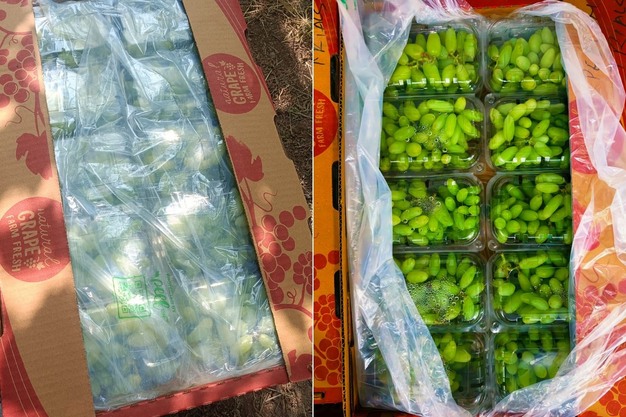
According to Moturu, PeelON addresses two key challenges in grape exports: fungal pressure during long transit cycles and dependence on sulfur pads. "Traditional sulfur-based systems are effective but come with operational complexity, residue management concerns, and additional packaging inputs. We're introducing a plant-based, compostable liner that eliminates the need for sulfur pads entirely. By intelligently managing moisture balance and internal carton conditions, PeelON helps reduce spoilage while simplifying the packaging system to a single liner solution."
 © PeelOn Inc.
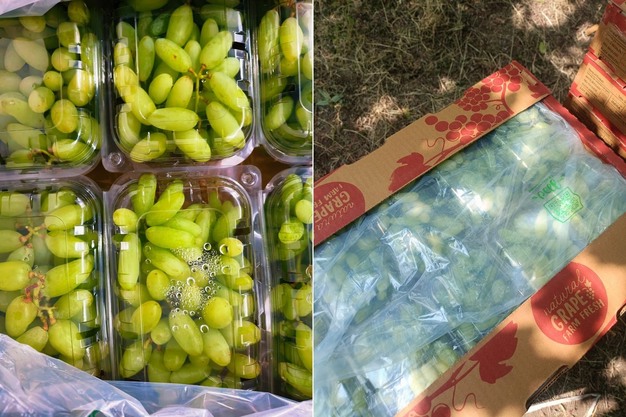
"Our compostable liner is designed to create a stable micro-climate inside the carton. It helps regulate moisture levels and gas exchange, reducing condensation buildup that often accelerates fungal development. Instead of releasing sulfur dioxide, the liner incorporates plant-based functional components engineered into the material structure. These elements help create conditions that are less favorable for fungal growth while maintaining grape firmness and visual quality during long sea shipments. The result is extended storage potential without chemical pads."
Moturu states that sulfur pads have been widely used for decay control, but they introduce several challenges. "The challenges sulfur pads bring vary from a risk of sulfur residues, to increased handling requirements in packhouses, regulatory and retailer scrutiny, and additional material and packaging costs. As premium retailers strengthen food safety and sustainability standards, exporters are seeking cleaner solutions that reduce chemical dependency while maintaining performance. PeelON eliminates the need for sulfur pads, reducing complexity without compromising storage life."
For exporters targeting the U.S. and Europe, PeelON offers several benefits, Moturu states: "There's reduced spoilage during transit, a simplified carton setup, lower rejection risk due to residue concerns, and improved consistency in arrival quality. This translates into better sell-through rates and stronger retailer confidence, particularly in markets focused on clean-label and sustainability initiatives. Our liners are home compostable, made from plant-based materials, free from synthetic preservatives, and designed to replace conventional plastic liners. As regulations in Europe and parts of the U.S. tighten around both chemical residues and plastic waste, we provide a solution aligned with circular packaging objectives. It allows exporters to reduce plastic use while eliminating chemical decay pads, addressing two environmental concerns in a single system."
 © PeelOn Inc.
Removing sulfur pads from the equation also makes the packaging model simpler, Moturu explains. "While sulfur pads have been standard practice, they add both material cost and operational handling steps. By removing sulfur pads and reducing spoilage losses, we simplify the packaging model. As a result, exporters benefit from fewer packaging components, lower spoilage-related losses, reduced rejection and claims, and more consistent quality at the destination. When factoring in shrink reduction and operational efficiency, the overall economics can improve compared to traditional sulfur-based systems."
"Our vision is to transition grape packaging from chemical dependence to biologically aligned performance. By combining plant-based materials with intelligent micro-climate control, the company aims to redefine how grapes are shipped globally, making exports cleaner, safer, and more sustainable without sacrificing storage life. As retailers and consumers demand toxin-free produce and environmentally responsible packaging, we position ourselves as a future-ready alternative: Toxin-Free Grapes. Long Storage. Sustainable Exports. One Smart Liner," Moturu concludes.
For more information:
Dr. Taraka Ramji Moturu
PeelON.inc
Tel: +1 (956) 315 3151
Email: [email protected]
https://peelon.co/