In supply chain sustainability, investment horizons are often measured in half-decades. Solar panels may take seven years to pay back, while a new distribution centre may require four. In packaging, however, the shift from single-use cardboard and wood to pooled Reusable Plastic Crates is delivering shorter return periods, particularly in countries where wood and cardboard are expensive, according to EastFruit.
According to the team working on the horticultural component of the joint FAO and EBRD Agri-food Climate and Environmental Sustainability Initiative, investments into systems of reusable foldable crates in Central Asia could offer a payback period of 1 year, assuming everything goes perfectly. In Eastern Europe and the SEMED region, payback periods may also remain relatively short.
 © EastFruit
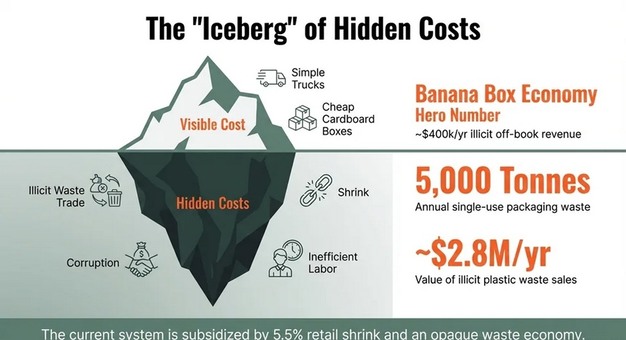
For a supermarket chain operating 150 stores and handling approximately 110,000 tons of produce annually, disposable packaging represents a recurring cost. The model requires around 5,000 tons of packaging material per year, including cardboard, wood, and low-grade plastic. FAO fresh produce logistics expert Fedir Rybalko estimates that an investment of approximately US$2.81 million in 770,000 durable, foldable crates and washing infrastructure would allow a retailer to eliminate this waste stream.
Even after accounting for washing and logistics costs, the estimated net annual benefit ranges between US$3.9 million and US$4.4 million. Beyond packaging procurement, the model addresses shrinkage. Reusable crates provide improved protection and ventilation and allow produce to be picked directly into the crate, reducing handling and time to the consumer. "My 15 years of experience introducing these solutions in different countries suggests that it could reduce produce loss by an estimated 2 percentage points", says Mr. Rybalko.
The reduction in inventory loss alone is estimated at over US$2 million per year. Combined with the elimination of waste disposal costs and the operational efficiencies linked to standardized crates, the Internal Rate of Return can exceed 40%. According to FAO Economist and horticultural component coordinator Andriy Yarmak, implementation remains complex.
Many attempts to introduce foldable crates fail because they require close coordination between supermarket chains, traders, farmers, and crate operators. Software systems must be adapted, as packaging becomes an asset rather than a cost, and resistance may arise at the fresh produce department level. According to Yarmak, pooling systems provide benefits for farmers, traders, supermarkets, and national ecological performance.
"Pooling of foldable crates is a perfect example of circular economy, helping improve ecological and economic sustainability", concludes Andriy Yarmak.
Source: EastFruit