After more than 18 years of research, Embrapa has introduced BRS Pérola, a seedless white table grape cultivar for Brazil's Southern Region. The variety is positioned for protected cultivation under plastic covering, with reported production potential of up to 30 tons per hectare.
Evaluations in Serra Gaúcha and Santa Catarina, in partnership with Epagri, supported the development of a production system adapted to regional conditions. The cultivar expands the portfolio of table grapes for fresh consumption alongside BRS Vitória, BRS Isis, and BRS Melodia.
According to João Maia of Embrapa Uva e Vinho, demand exists for a seedless white cultivar to partially replace Italia. "The increase in rural tourism and wine tourism is stimulating investments in planting table grapes for sale on the property, in a 'pick and pay' system. This allows for increased profits through direct sales to consumers," he states.
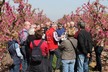
The cultivar will be launched on February 19 during a field day in Alto Feliz, Rio Grande do Sul, and at the Grape Festival in Caxias do Sul.
BRS Pérola originates from a cross made in 2004. In Serra Gaúcha, berries reach approximately 18 mm in diameter after gibberellic acid application. The variety shows an elongated shape, medium-thick skin, colourless pulp, and rudimentary seed traces. Under a plastic cover, the cycle from sprouting to maturation is about 170 days, with harvest in February. It is not recommended for the Brazilian Semi-Arid region.
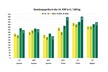
Patrícia Ritschel highlights production management. "The plants show good bud fertility in medium-sized canes, and this allows for yields of between 25 and 30 tons of grapes per hectare, using mixed pruning," she explains. Lower bunch compactness supports thinning operations.
Recommended spacing in Serra Gaúcha is 2.50 meters between rows and 2.00 meters between plants on Paulsen 1103 rootstock, under pergola systems with plastic covering. "The use of covering is fundamental to guarantee the production of quality table grapes in the Southern Region," Ritschel notes.
Seedlings will initially be marketed by licensed nurseries, Viecelli Viveiros, and MP Mudas. Other nurserymen may obtain basic material through Embrapa's Canoinhas Experimental Station. Producers are advised to reserve material in advance and use rootstocks with a recognised sanitary origin.
Daniel Grohs states: "To maintain the sanitary quality of the cultivar, grafting onto rootstocks with recognized sanitary origin is recommended." He also advises growers to verify seedling quality at delivery.
Source: Embrapa / Abrafrutas