This Chilean grape season is taking place in a more restricted trading environment compared to last year, with markets reacting strongly to any increase in volume and narrower profit margins. In this context, the United States remains a leader, and the season's tone is shaped by a preference for premium green varieties and tighter supply management among southern hemisphere countries.
According to Alberto Cruz, representative of Provex, the 2025-2026 table grape season is forecast to yield 63.5 million boxes, down from last season's 67.9 million, according to data from the Chilean Grape Committee.
 © Provex
"The estimated volume from week 50 to 17 indicates production stability compared to last season, but the commercial context is more difficult. Markets are adjusting, with higher costs than previous seasons," he warned, referencing the United States, Asia, and other destinations.
"The United States remains the main market for Chilean grapes, accounting for between 50% and 60% of shipments. Europe, Asia, and, to a lesser extent, Latin America complete the export matrix. The main market for Chilean grapes is the United States. It has always been the United States, but other destinations have been gaining ground in recent years," Cruz stated.
The commercial window has been more organized than in the previous season. Peru started its season earlier, and Chile gradually entered from the north, moving from Copiapó to the central region. Cruz noted that this year, the weekly volumes that the U.S. market can handle have not been exceeded. "Chile and Peru have shipped approximately 3.5 to 4 million boxes weekly, so they haven't built up inventory," he explained. In contrast, last year, some weeks saw combined shipments of up to 5 or 6 million boxes, which affected prices and led to stockpiling.
 © Provex
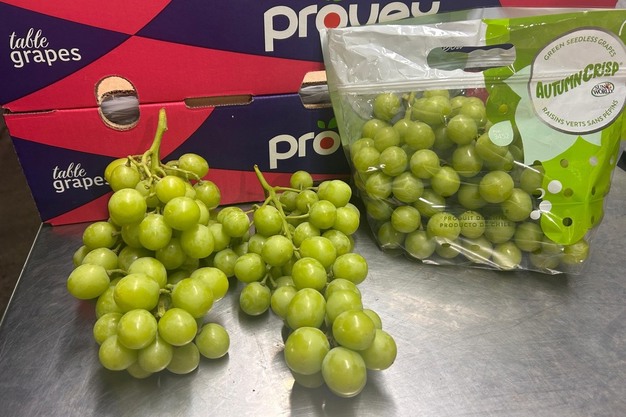
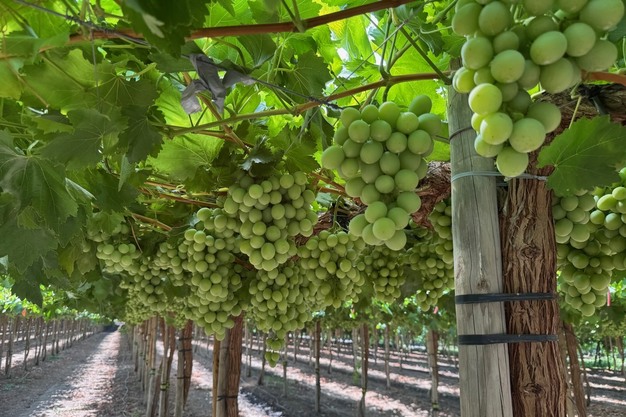
Currently, the market clearly favors premium green varieties. "Today they are buying four greens for one red," he said, emphasizing the popularity of varieties like Sweet Globe and Autumn Crisp. This trend has led to increased demand for green grapes in the U.S., while red grapes are selling more slowly.
Regarding prices for the rest of the season, the outlook seems less favorable than last year. Cruz summarizes it as being "tighter than last year." Additionally, the 10% tariff in the United States cuts into final returns. "When there is no inventory and rotation occurs, the market flows smoothly, and prices stay stable," he said, stressing that current volume management helps keep the market fluid. The main challenge moving forward will be to maintain the balance between supply and demand. "This season will be very challenging, possibly more than last year, but we expect market stability for the rest of the period," he said.
 For more information:
Alberto Cruz
Provex
Chile
Tel: +56 9 9 334 1858
Email: [email protected]