On April 9, 2025, US President Donald Trump signed an executive order directing the restoration of "America's maritime dominance" and mandating a Maritime Action Plan by November 5. The plan was released on Friday and includes shipyard incentives, workforce programmes, and deregulation, but its central proposal for ocean shipping is a "universal infrastructure or security fee" on foreign-built vessels calling at US ports.
The plan outlines scenarios of one cent per kilogram, which could generate about US$66 billion over 10 years, and 25 cents per kilogram, which could yield close to US$1.5 trillion.
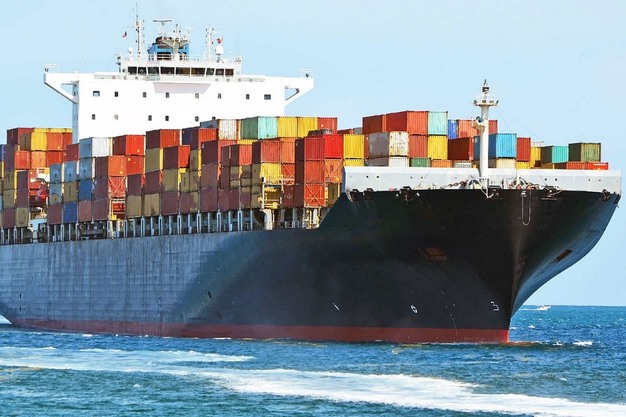 © Kuehne+Nagel
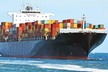
Container shipping
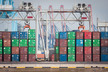
In 2024, the US imported 209.3 billion kilograms of containerised cargo, equal to nearly 28.2 million teu. That equates to roughly 7,500 kilograms per imported teu.
Assuming a vessel arrives with 5,000 teu and 7,500 kilograms per teu, a one cent per kilogram fee would amount to about US$375,000 per call, or US$75 per teu. At 25 cents per kilogram, the cost would rise to about US$9.4 million per call, or US$1,875 per teu.
On a national basis, the cost would total about US$2.1 billion annually at one cent per kilogram and US$52.3 billion at 25 cents per kilogram. Unlike previous US Trade Representative measures targeting Chinese-built ships, a universal fee would not allow carriers to avoid charges by redeploying vessels.
Tanker shipping
The US imported 827 million barrels of crude oil in 2025, excluding Canada, and 632 million barrels of refined products. One barrel of crude averages 136 kilograms, and refined products 124 kilograms.
At one cent per kilogram, annual crude and product imports would face about US$1.9 billion in fees; at 25 cents per kilogram, roughly US$47.7 billion.
An Aframax tanker carrying 70 million kilograms would pay US$700,000 per call at one cent per kilogram and US$17.5 million at 25 cents per kilogram. A medium-range tanker carrying 37 million kilograms would pay US$370,000 per call at one cent per kilogram and US$9.25 million at 25 cents per kilogram. Costs would likely be passed to US consumers.
Land port maintenance tax
One of the concerns raised about USTR port fees was that they would push shippers to import cargo to Mexican and Canadian ports instead, then bring goods to the US by truck or rail.
The universal port fee would create an even greater incentive, because ocean carriers could not avert this levy by switching out tonnage as they did before.
The MAP proposes a "land port maintenance tax" for cargo that enters the US across borders from Mexico and Canada, an equivalent to the existing harbour maintenance tax. The proposed fee is 0.125% of the cargo value, as with the HMT.
To view the full report, click here. (www.whitehouse.gov)
 © Kuehne+NagelFor more information:
Andrea Lagno Assael
Kuehne+Nagel
Email: [email protected]
www.mykn.kuehne-nagel.com