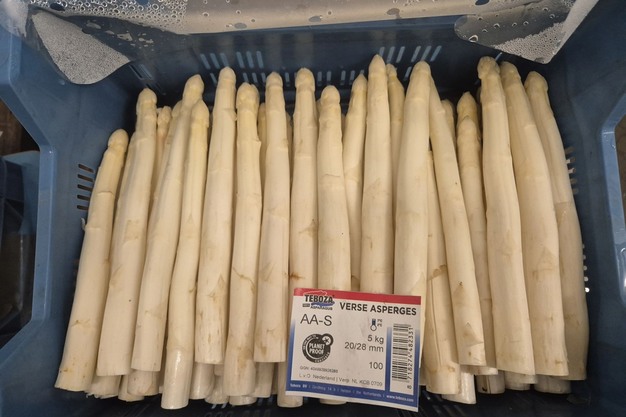
The white asparagus selling season has officially started again at Teboza, the largest asparagus grower in the Netherlands. "Last week we already harvested small volumes, but from today customers can also enjoy them," says Will Teeuwen. Demand for the premium product is strong, according to the asparagus grower. "We've been receiving flat calls for weeks," he says.
 © Teboza
Last year, Teboza announced that it would no longer invest in forced cultivation in the Netherlands. "However, we continue to harvest heated asparagus on all existing fields, and we have sufficient acreage available to maintain forced asparagus production in the coming years. What we are no longer doing is starting new forced cultivation in the Netherlands. For that, we are shifting to Spain and Italy."
"The big difference compared with recent years is that, by Dutch standards, we had another good winter with a longer cold period. That always has a positive effect on asparagus. Cold conditions allow the plant to rest more and store sugars more effectively. This also stimulates faster growth in spring, leading to thicker spears, which in turn result in more class I produce and higher yields per hectare."
 © Izak Heijboer | FreshPlaza.com
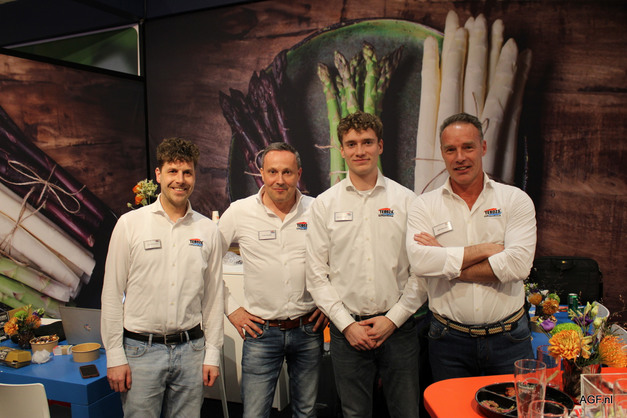
Rob Timmermans, Frank Zanders, Maarten Jacobs, and Will Teeuwen of Teboza at Fruit Logistica
Structural decrease in acreage
The Dutch asparagus acreage continues its declining trend again this year. "We see that smaller growers, in particular, are struggling to get everything done, causing some to drop out. Larger growers are expanding, but the contraction is happening faster than new acreage is being added," Will continues. "For example, we would easily be able to market an additional 100 hectares, but besides sales, you also need good land, staff, and housing, and that is no small challenge."
As a result, Will is not concerned at all about the demand for asparagus. "We have been getting flat calls for weeks as soon as asparagus becomes available. That is also because in other years we often entered the market earlier. This year, we are deliberately starting a bit later, also to allow the plants to settle properly, and early February is an excellent moment to begin."
Cold winter impact
The first greenhouse asparagus are mainly finding their way into catering, food service, and specialised retail, particularly in Germany. "At the moment, we are talking about kilogram prices between 20 and 25 euros for double-A. That is not yet interesting for retail," Will says. He looks to the coming weeks with confidence. "It depends heavily on the weather, but if we get a normal spring, supply could pick up earlier as a result of last winter's cold period."
"At our cultivation site in Andalusia, we are also experiencing unusually high rainfall, so production there is running behind as well. This is now the third year in a row that Spain has faced excessive rainfall at this time of year, which is why we decided to start growing both green and white asparagus in foil greenhouses in Spain, too. We are located in a small greenhouse area, so that transition is relatively manageable. In recent years, we have also introduced Italian white asparagus to the market, and these have been very well received. As a result, we can comfortably supply the market with products from southern Europe until week 13–14," Will concludes.
 For more information:
Will Teeuwen
Teboza
Zandberg 14b
5988 NW Helden
Tel: +31 (0) 77 307 1444
[email protected]
www.teboza.com