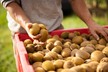
The European Union is increasing its engagement with the Tunisian date supply chain, with a focus on exports to the EU market. In recent days, the EU Delegation to Tunisia accompanied a group of European buyers to southern Tunisia for meetings with date producers and processors in Douz, Kebili, and Tozeur.
During the visit, buyers toured palm groves as well as packaging and processing facilities to assess production capacity, quality standards, and traceability systems. One day of the program was dedicated to individual business meetings, allowing Tunisian companies to present their commercial offerings and discuss potential cooperation with European operators.
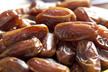
According to the EU Delegation to Tunisia, dates from the country are positioned for further development on the European market, both as fresh or packaged fruit and as processed products such as date paste, syrup, sugar, or powder. These products are aligned with EU market requirements related to quality, food safety, and traceability. Tunisian dates are described by local stakeholders as "Tunisian gold," reflecting their role within national agriculture and export-oriented production.
Tunisia ranks among the world's leading date exporters, with date palm cultivation forming an important part of agricultural activity in southern oasis regions. Deglet Nour is the most widely recognised export variety, while more than 100 additional varieties are grown for different market segments, including Allig, Khouat Allig, and Kenta, which differ in ripening periods and product characteristics.
Production is concentrated in desert oasis areas where underground water resources and climatic conditions support date palm growth. Dates are marketed in various formats, with international buyers often favouring fruit sold on the twig and without additives or syrups to meet market specifications related to presentation and processing.
Market access to the EU is supported by duty-free treatment under the EU-Tunisia Association Agreement, which was recently ratified by the Tunisian parliament. This framework allows Tunisian exporters to ship dates to the EU without import duties.
The buyer mission forms part of the Program to Support Competitiveness and Market Access – Agriculture and Processing Industries, known as PACE-AMIT. The program is co-financed by the EU and Germany and implemented in Tunisia by the German Cooperation Agency. Its objective is to support competitiveness in agricultural supply chains, encourage local processing, and facilitate access to international markets, with an emphasis on the European Union.
Source: NovaNews