"In Rwanda, we specialize in fresh French beans for the European market, particularly France," says Gamaliel Ishimwe, agronomist at Proxifresh Rwanda, a Mauritian agrifood company firmly rooted in Rwanda's horticultural export sector.
Proxifresh operates through a hybrid production model, combining centrally managed plots with a network of contracted smallholder farmers across several regions of the country. This structure allows the company to ensure a year-round supply while mitigating challenges linked to fragmented landholdings and increasing climate variability.
The company's core crop is fine French beans, which are in strong demand on the European retail market. According to Nelson Mwiti, Head of Production at Proxifresh, the Vanilla variety is predominantly used due to its reliable yields, consistent visual quality, and strong market acceptance. Other varieties, such as Star and Turaco, have been tested, but have not yet demonstrated the consistency required for large-scale commercial production.
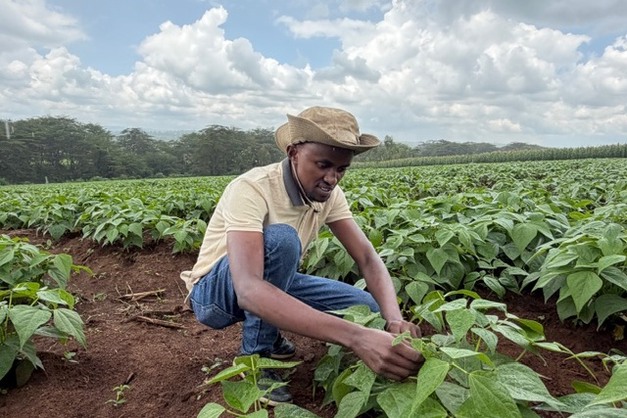
"Production cycles are relatively short, ranging from 46 to 50 days from planting to first harvest, depending on regional temperatures. Harvesting is carried out in multiple rounds, often up to six per cycle, which helps ensure continuity of supply and alignment with weekly export programs," Mwiti explains.
 © FreshPlaza
Production cycles for French beans are relatively short, ranging from 46 to 50 days from planting to first harvest, depending on regional temperatures.
After harvest, beans undergo immediate pre-sorting directly in the field. On average, around 75-85% of the harvest meets export-grade specifications, depending on seasonal and agronomic conditions. Lower-grade produce is not discarded but sold on the local market, ensuring full crop valorisation and additional income streams for farmers.
"Baseline exportable yields average around 8 tons per hectare, with some well-managed production zones in Eastern Rwanda reaching up to 12 tons per hectare under optimal conditions," says Ishimwe. Following field selection, beans are transported to the packhouse for further grading, packing, and cold-chain preparation prior to export.
Farmer selection follows strict criteria. "We look for farmers with sufficient plot size, access to water, and a willingness to comply with our agronomic protocols," explains Marie-Claire Nikuze, Head of Operations at Proxifresh. Inputs such as certified seeds are supplied directly by the company to ensure varietal uniformity and compliance with export standards. Farmers are supported through formal contracts and detailed planting schedules aligned with export demand.
 © FreshPlaza
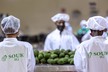
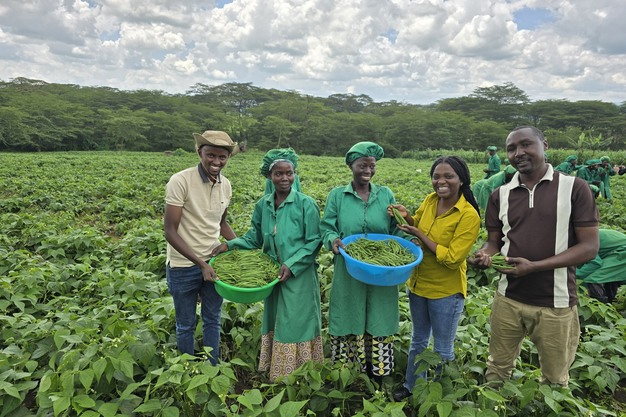
Gamaliel Ishimwe (agronomist), Marie-Claire Nikuze (Head of Operations), and Nelson Mwiti (Head of Production), together with two harvesters.
Harvesting and sorting activities rely heavily on female labour, particularly for precision-based tasks, while men are generally involved in heavier operations such as land preparation and transport.
Despite French beans being a high-value crop, access to capital remains a constraint for some farmers. Climate variability also presents increasing challenges, with prolonged dry spells followed by intense rainfall contributing to higher disease pressure. To mitigate these risks, Proxifresh diversifies production across multiple agro-climatic zones, applies strict farm hygiene practices, and focuses on preventive crop protection strategies.
Production planning at Proxifresh starts with the buyer. Weekly volume forecasts are collected well in advance and translated into detailed planting and harvesting schedules. This market-driven model enables the company to supply typically between 14 and 18 tons of French beans per week, depending on seasonality, while maintaining consistency, quality, and reliability for European customers.
Due to their short shelf life, French beans are shipped by air to Europe, primarily to France. While air freight presents cost and sustainability challenges compared to sea-freightable origins, Proxifresh remains competitive through product freshness, taste, and strict adherence to European quality and food safety standards.
 © FreshPlaza
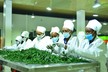
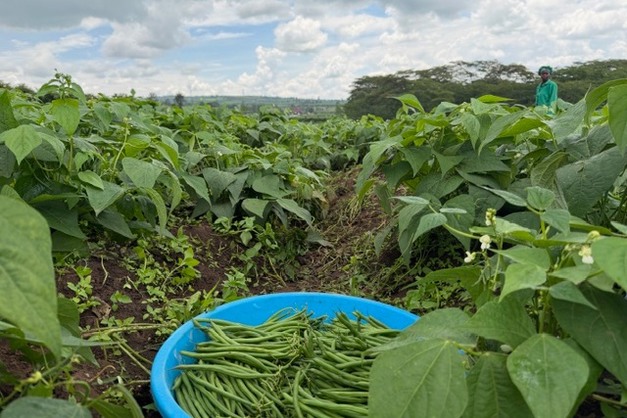
Proxifresh remains competitive through product freshness, taste, and strict adherence to European quality and food safety standards.
Looking ahead, Proxifresh is actively trialling additional crops such as chilies, sugar snap peas, snow peas, baby carrots, baby courgettes, and beetroots, with the objective of gradually expanding its premium vegetable offering for the European market.
For more information:
Proxifresh Rwanda Ltd.
Tel.: +250 784 225 953
[email protected]
www.proxifresh.com
For more information on the Rwandan fresh produce export sector, please contact Charlotte Uwicyeza ([email protected]) of the National Agricultural Export Development Board (NAEB), which will also be present at the upcoming Fruit Logistica: Hall 26, Stand C-61. A joint booth with Rwandan companies can be found at Stand B-80 in Hall 26. Click here for an overview of Rwandan fresh produce exporters.