India's orange exports are facing a tough season from heavy September-October rains, says Araf Ansari, owner of fresh produce exporter Moghesia Global Venture. "Production has been lower than usual due to unseasonal and excessive rainfall, which hurt fruit setting, peel quality, and yields."
Ansari highlights that the season splits into two main cycles, with certain timing variations observed across regions. "The Ambiya variety typically runs mid-September to the end of December, sometimes even mid-January. Mirug is harvested from the end of January until mid-April." He explains that Mirug oranges are more durable, sweeter, and better suited for long-distance trade. "Mirug can be stored in cold storage, allowing exporters to time sales during high demand periods. Ambiya oranges are more perishable and not suitable for cold storage, requiring quicker movement after harvest."
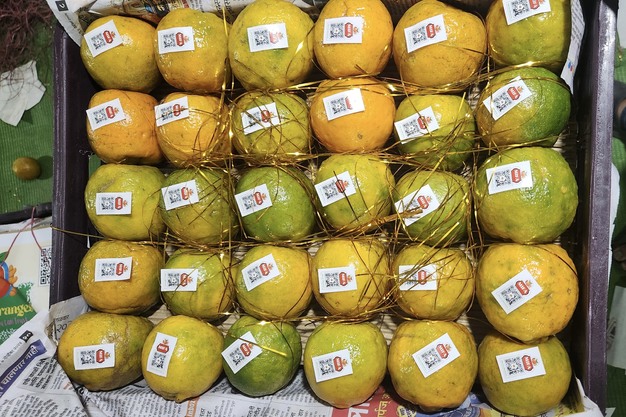 © Moghesia Global VentureIndian oranges are ready for export to Bangladesh and Nepal
According to Ansari, Bangladesh buyers prefer Indian oranges over fruit from South Africa, Egypt, or Bhutan due to their familiar taste profile. However, quality for this season trails last year's bumper Ambiya crop, he says. "Export requirements include 150-225 gram fruit with shiny skin, uniform surface, and minimal blemishes. Quality is being managed through intensive sorting, substantially increasing post-harvest losses. Orchard prices climbed from USD 0.20 to 0.25 per kg in mid-September to USD 0.33 to 0.40 per kg in November and USD 0.44 to 0.6 per kg at the moment."
Ansari mentions that Bangladesh dominates India's orange export share despite political and tariff uncertainties. "Nepal comes in next, taking limited volumes. Gulf countries show strong potential but demand size uniformity, shelf-life improvements, and better appearance." One challenge observed is that "higher prices fetched by premium orchards are attracting unrealistic expectations among average-quality producers in the same region. Though credible exporters attempt to deal with this through negotiation and education, progress remains slow."
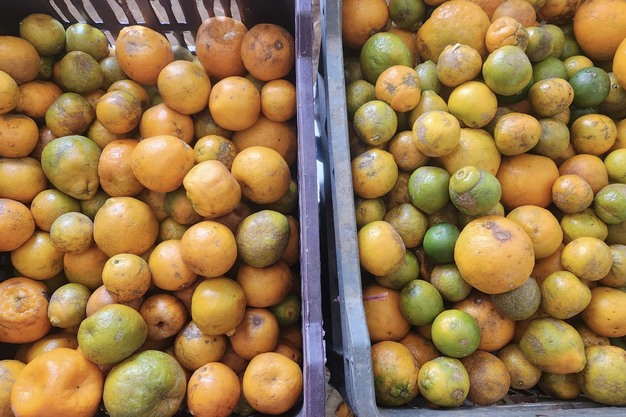 © Moghesia Global VentureRejected oranges placed in baskets after intensive sorting and grading
Ansari remains optimistic about the growth of Indian orange exports in the future. "India's agriculture export authority is promoting the export of Indian oranges in Gulf markets through trade fairs and trials with retailers. R&D support from institutions like CSIR, BARC, and agricultural universities can enhance shelf-life, develop new varieties, and reduce post-harvest losses to compete in new international markets."
Looking ahead, Moghesia Global sees economic potential in value-added products like orange juice, pulp, jams, essential oils, and cleaners to utilize sub-grade fruit. "Processing nutritionally fit but cosmetically challenged oranges would stabilize farmer incomes and unlock new revenue. For now, experienced procurement keeps fresh orange exports flowing despite thin margins from quality issues and costs," Ansari concludes.
For more information:
Araf Ansari
Moghesia Global Venture
Tel: +91 99 93 378 630
Email: [email protected]