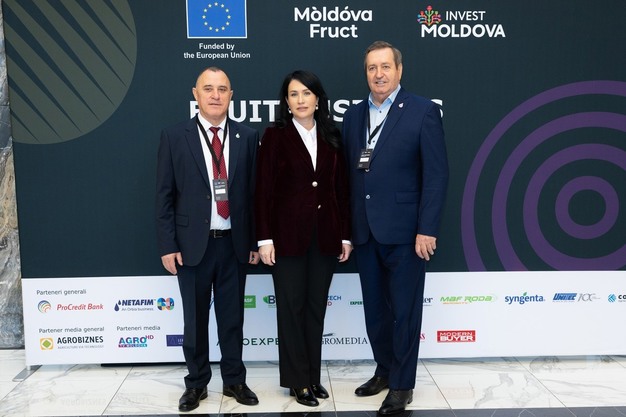
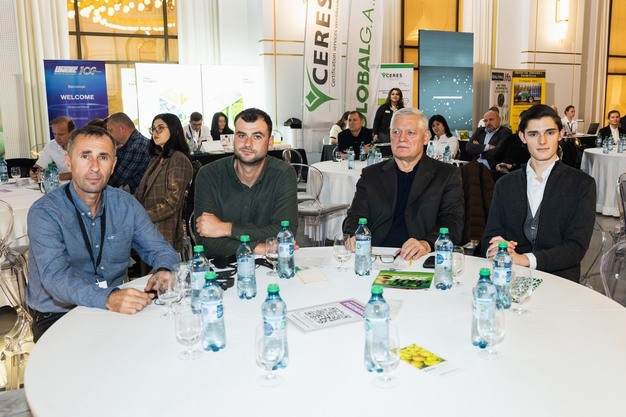
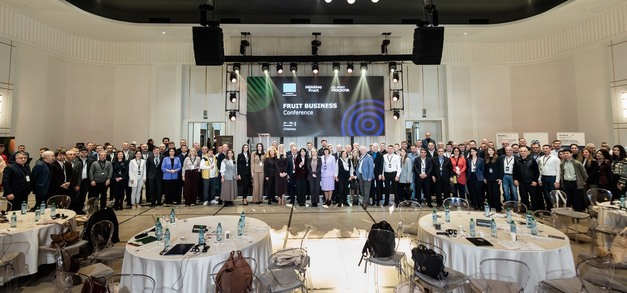
Around 300 fruit producers and exporters, together with national and international experts in fruit growing, participated in the 11th edition of the Fruit Business Conference in Moldova on November 27. Organized by the Moldova Fruct Association with the support of the European Union and the Invest Moldova Agency, the conference has, over the past 11 years, strengthened its status as a key platform for analyzing sector trends, sharing technological solutions, best practices for increasing productivity, and strategies for accessing foreign markets.
 © APEF Moldova Fruct
"Moldova's fruit-growing industry needs rapid modernization to remain competitive on European markets. We have the resources and fruit growers ready to invest. Still, deforestation, declining production, unpredictable weather, and difficult access to financing are limiting the sector's development," said Vitalie Gorincioi, president of the Association. "The establishment of 23,000 hectares of modern plantations over the next five years would double exports and increase prosperity in rural areas. Predictable policies, harmonized with the EU, rapid access to plant protection products, and support for irrigation and post-harvesting are needed. Only through joint efforts between producers and state institutions can Moldova become a competitive orchard of Europe."
 © APEF Moldova Fruct
"In recent years, Moldova has managed to position itself among the top 20 global exporters of plums, walnuts, cherries, apricots, rapeseed, apples, and grapes. This is thanks to farmers who have invested in modern orchards, state-of-the-art technology, and post-harvest infrastructure, but also to the opportunities opened up to us, in particular, by the European market. Moldovan fruit deserves to be on the shelves of stores in Europe and around the world, and Moldovan farmers are among the most respected and competitive producers," said Alexandru Munteanu, Prime Minister of the Republic of Moldova.
 © APEF Moldova Fruct
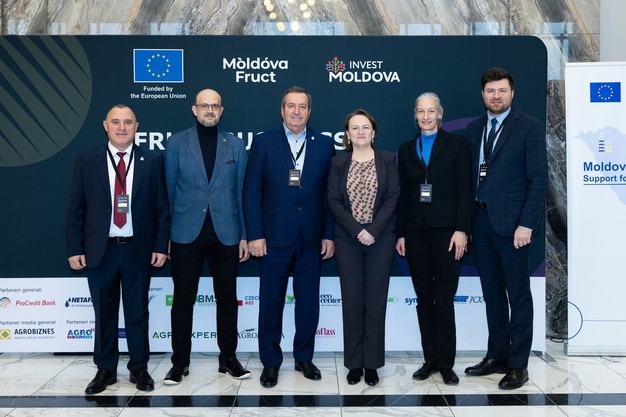
The European Union Ambassador to the Republic of Moldova, Iwona Piórko, emphasized: "The European Union is firmly committed to supporting producers in the Republic of Moldova through programs that improve the competitiveness, quality, and sustainability of the fruit sector. These initiatives help farmers adopt modern technologies and meet European standards, opening up new opportunities for trade and cooperation."
 © APEF Moldova Fruct
"The fruit produced and exported by our farmers has become, in recent years, a true ambassador for the Republic of Moldova in Europe and on international markets, and the Ministry of Agriculture and Food Industry gratefully acknowledges the contribution of all those who have been instrumental in these achievements—the farmers who, year after year, with care and hard work, have built a competitive, modern, and export-oriented fruit sector. To increase the competitiveness and resilience of the horticultural sector, the Ministry of Agriculture and Food Industry is making consistent efforts to support the sustainable development of agriculture through coherent policies and subsidy programs aimed at development, modernization, and economic growth," said Ina Butucel, Deputy Secretary General of the Ministry of Agriculture and Food Industry.
 © APEF Moldova Fruct
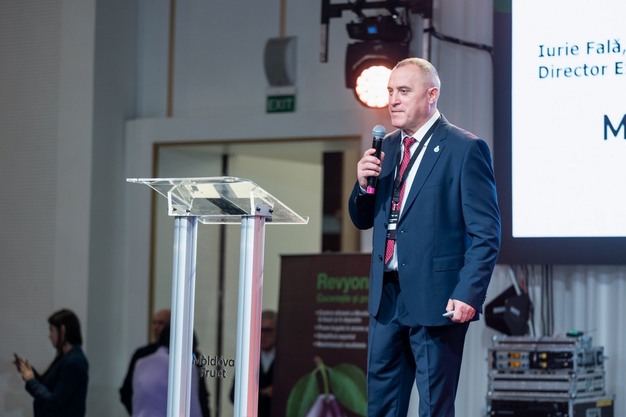
"The Invest Moldova Agency supports local companies in accessing increasingly diversified foreign markets. Between 2024 and 2025, 137 companies in the agrifood sector benefited from export missions, and participation in international exhibitions such as Fruit Attraction, Fruit Logistica, Anuga, and SIAL led to an export volume of over MDL 127 million. These results show that Moldovan products are consolidating their position in demanding markets and that support for internationalization remains as important as ever," said Irina Tolstousov, Deputy Director of the Invest Moldova Agency.
 © APEF Moldova Fruct
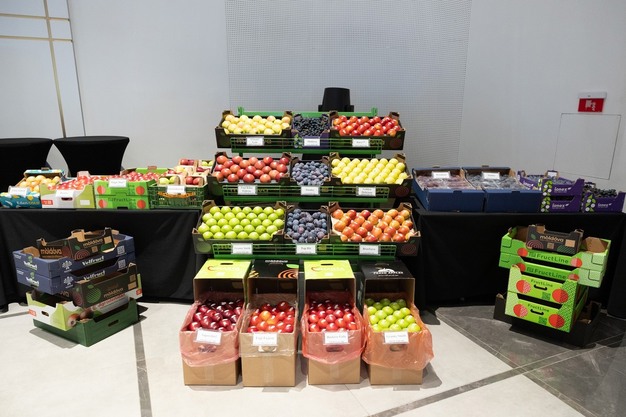
Spring frosts and October rains meant that 2025 was marked by lower global harvests for all fruit categories except apples. This also affected export volumes per category. At the same time, the value of exports is relatively higher due to the increase in average prices in export markets.
"Although the frosts significantly affected the harvest, the quality of this year's apples is good, and the price has partially offset the decline in quantity. While in other years we produced over 2,000 tons of apples, in 2025 we have around 900 tons, which we prefer to sell fairly and at a price that respects our work. The European market remains our priority," said Stanislav Russu, agronomist, Vardan Agro SRL.
 © APEF Moldova Fruct
"Despite the challenges, we have managed to maintain the quality of our apples and start exports. We are already delivering to the Middle East and India, and in January, we will resume exports to the UK and Romania," said Valeria Caduc, export manager at Smarta AS SRL.
 © APEF Moldova Fruct
As a result, apricot exports fell to 3,859 tons, almost three times less than in 2024. Cherries recorded a total volume of approximately 12.4 thousand tons compared to 13.6 thousand tons in 2024. Plums have the potential to exceed the volume delivered in 2024 by about 10 thousand tons, reaching over 70 thousand tons. Although volumes declined, the value of exports increased in most categories. The value of apricot exports increased 1.8 times, and cherry exports doubled, signaling increased demand for high-quality products. Apple exports in the first 10 months of the year were 25.8 thousand tons less than in the same period last year, and export revenues decreased by only $4.6 million.
For more information:
Iurie Fala (CEO)
Moldova Fruct
Tel: +373 222 23 005
Mob: +373 693 66 424
[email protected]
www.moldovafruct.md