The Assembly of European Horticultural Regions (AREFLH) held its second Annual Forum at the Delegation to the EU of Emilia-Romagna Region, bringing together regional representatives, producer organisations, and EU officials to discuss the future of European horticulture and agricultural policy.
Opening the session, Alessio Mammi, Minister of Agriculture and European Affairs of Emilia-Romagna, and Ramón Fernández-Pacheco Monterreal, AREFLH President and Minister of Agriculture of Andalusia, called for stronger collaboration between EU institutions, regions, and producers.
 © AREFLH
Keynote speaker Professor Paolo De Castro warned that European horticulture is under growing pressure from strict plant protection rules and competition from non-EU countries. He urged the European Commission to promote mutual recognition of plant protection products and to establish EU-wide rules for gene editing. "The world is not waiting, Europe must defend its agri-food sector, its leading export industry," he said.
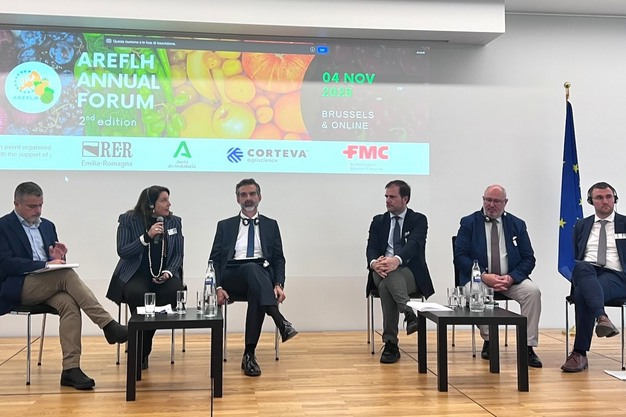
The first panel focused on the future of sectoral interventions under the Common Agricultural Policy (CAP). MEP Carmen Crespo Díaz criticised the proposed reform, calling for a full review. She and Eric Sargiacomo opposed the idea of a single consolidated fund, warning it could weaken EU agricultural policy. "The European Defence Strategy cannot be built at the expense of European farmers," Crespo said.
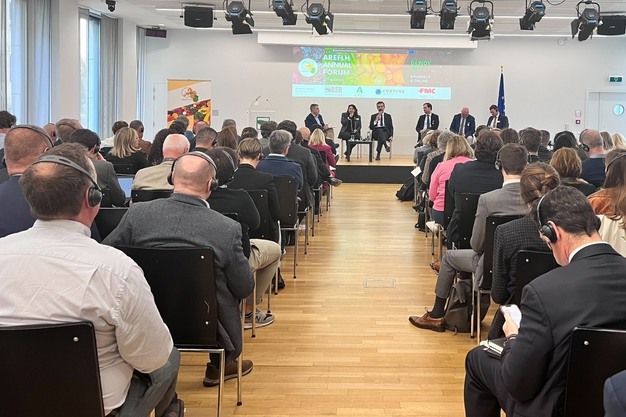
European Commission representative Ricard Ramon stated that shared responsibility between the Commission and Member States would be designed to protect functioning sectors like fruit and vegetables. AREFLH President Fernández-Pacheco Monterreal countered that "the CAP is losing its soul within this single fund," stressing that the Common Market Organisation provides more than income support—it ensures collective investment and production planning.
 © AREFLH
Arnaud Lécuyer, Vice-President of Brittany, added that the proposal could increase inequality between regions, noting that "Europe must remain close to its citizens."
The second panel addressed innovation as a driver of sustainable plant protection. Corrado Finardi of CropLife Europe said pest and disease management requires a more pragmatic approach.
European Commission representative Sirkku Heinimaa presented updates on the New Genomic Techniques (NGT) regulation. MEP Alexander Bernhuber supported accelerating approvals for biological control, saying, "Approving more sustainable control solutions can take up to 10 years; farmers do not have that time."
Mr. Braekman of the Region of Flanders highlighted uneven enforcement of plant protection rules, while AREFLH Vice-President Lisa Martini said operational programmes remain key for applying modern, sustainable techniques.
Closing the forum, Fernández-Pacheco Monterreal said discussions reflected the shared priorities of European horticultural regions and confirmed AREFLH's commitment to continuing dialogue with EU institutions.
 © AREFLHFor more information:
Laetitia Forget
AREFLH
Tel: +33 (0) 7 63 93 47
Email: [email protected]
www.areflh.org