President Gustavo Petro's recent visit to China marked a new chapter in bilateral relations, with direct effects on Colombia's agricultural sector, particularly in fruit and vegetable exports. In the joint declaration signed after the meeting with President Xi Jinping, both governments agreed on the need to diversify and balance bilateral trade, with a specific focus on agricultural products.
The document states that "the Chinese side welcomes more Colombian agricultural products of good quality that meet China's sanitary and phytosanitary criteria to the Chinese market." This clearly indicates openness to Colombian fruits, vegetables, and other fresh produce, potentially increasing future export opportunities for Colombia.
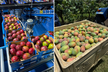
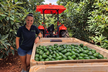
Colombia offers a wide variety of products, including tropical fruits such as avocado, mango, pineapple, gulupa, and uchuva, as well as berries and vegetables with potential to serve the Asian market. China's growing interest in high-quality fresh food, along with its consumption capacity, makes the country a key destination for Colombian producers.
However, strengthening trade relations with China also presents new challenges. Exporters will need to meet strict sanitary and phytosanitary requirements and ensure traceability and sustainability throughout the supply chain. In the joint statement, the two governments agreed to "boost agricultural production by improving rural mini-chains, promoting digital agriculture leading to a modern countryside." This emphasizes the need to modernize Colombia's agricultural and export processes to meet Chinese market demands.
Although the presidential visit has sparked optimism, detailed protocols for each fruit and vegetable product remain undefined. It is expected that, in the coming months, progress will be made on technical agreements to regulate the entry of additional fruits and vegetables into the Asian market, specifying volumes, seasons, and phytosanitary control standards.
The rapprochement with China could also help diversify Colombian export destinations, which are currently focused on Europe and North America. For the agricultural sector, this new phase offers an opportunity to expand and strengthen its presence in a market with significant consumption potential.
Source: wradio.com.co