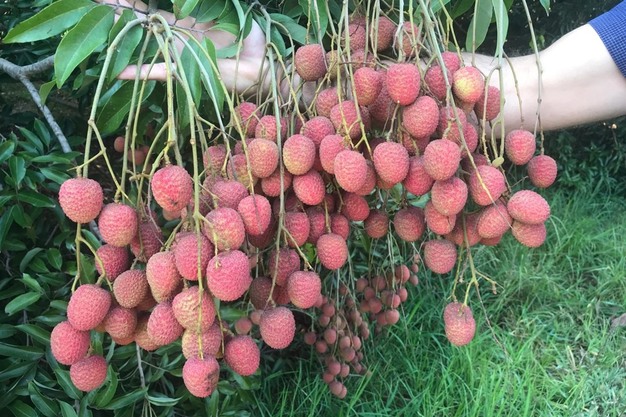
It won't be a bumper litchi season, but it will be a more normal litchi crop, reckons Stuart Butcher, marketing director of Tomahawk, "and significantly better than last year's poor crop, which was 15 to 20% of a normal crop! Even our competitors in the market, like Madagascar, Mauritius, and Réunion, had reduced crops last year. We feel it was climatic factors last year that caused this massive reduction in crop," he continues, "and this year we've had what you would probably call an ideal winter, with nice consistent cold units but not too much extreme cold."
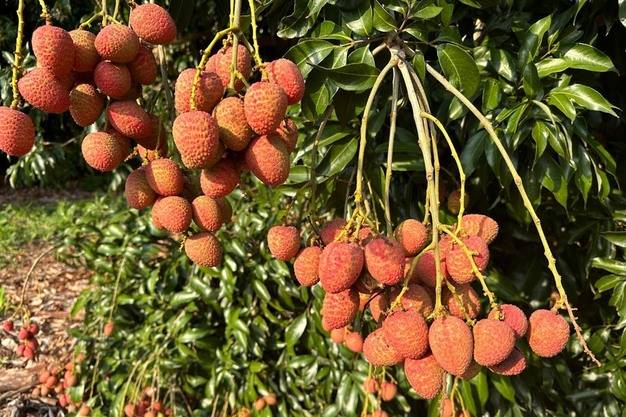 © TomahawkThere will be small volumes of the Mauritius cultivar (comprising 95% of their crop) from 10 November onwards
Last year, they didn't even have enough litchis to fill their USA programmes, then came the end of the zero-tariff AGOA agreement. "We have spent a lot of time building the USA market. Look, obviously, the tariff is in place, so it's a tricky situation, but we want to keep our clients fully supplied with South African litchis. We feel it's not right, after spending ten years building that market, to take a step backwards or pull out of the market. So we are going to carry on with a normal full programme, even with the tariff."
The first U.S. air and seafreight packing will start probably between 15 and 20 November, he says, remarking that the USA programme has a positive influence on other markets and a withdrawal from the U.S. would have a negative effect on a market like Europe: litchi sea freight there starts towards the end of November.
Extremely small shipments of the very early Third Months Red litchi are already going to Europe, where there are basically no other litchis at the moment, he says. Once the main season starts and volumes pick up, prices will necessarily come down. "I think the European economy is not where it was a couple of years ago. So, once there's a reasonable volume, the prices will come down to more reasonable levels."
 © Tomahawk
Mangoes possibly earlier than usual
The rest of the 2,600 hectares managed by Tomahawk on behalf of the land owners and their partners in a joint venture, the Matsamo Community Property Association, are planted with citrus, litchis, bananas, mangoes, papayas, and sugar cane.
Papayas had an exceptionally big peak in June, July, and August this year, he remarks, and volumes have since normalised.
The banana market is rather undersupplied at the moment, he says. Tomahawk supplies retailers with bananas and doesn't send much to the municipal markets. "Volumes are low after quite a harsh winter. It was reasonably cold, but we had a lot of extreme winds during this winter period, which was unusual."
The result was a high percentage of leaf damage. He continues: "It takes a banana plant a long time to recover from torn and damaged leaves. Volumes will probably remain low until December when production is expected to increase again."
The mango crop is looking positive, he observes, after a very good flowering and good fruit set. "I think there's a good mango crop out there, possibly a little bit earlier than normal. In my opinion, it was an ideal winter with consistent cold units, but not extreme cold. When you've got a good winter like that, you tend to have a good litchi and mango crop, even citrus flowering improves."
In the citrus category, Tomahawk grows Navels (for the local market), and for exports, pink pomelo (Shaddock), grapefruit, and Valencias. Pink pomelos flower early, making it to market well ahead of other citrus varieties despite its large size. Europe is quite a big market for the pink pomelo that Tomahawk grows; the balance goes to Russia and the Middle East, along with a little bit to the islands of Mauritius and Réunion. "They're probably the best thing we grow, in my opinion. They make wonderful eating."
For more information: Stuart Butcher
Tomahawk
Tel: +27 13 007 1430
Email: [email protected]