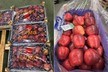
The Rural Development Administration (RDA) announced that three new grape varieties, Cocoball, Shooting Star, and Hongju Seedless, have entered full-scale distribution. The agency expects these varieties to reduce the market concentration of Shine Muscat and help stabilize farm income.
Until the 2010s, the Campbell Early variety accounted for about 60% of domestic grape cultivation. However, by 2020, Shine Muscat's share had reached 40%, while Campbell Early declined to below 30%. Shine Muscat began commercial distribution in 2015, marking a rapid varietal shift in the country's grape sector.
An RDA official said, "Shine Muscat rapidly expanded its cultivation area based on its high sugar content (an average of 18 Brix) and the convenience of being eaten with the skin."
The RDA expects the three new varieties, developed with similar traits, to gain traction among both producers and consumers.
Cocoball, the most recent variety, reaches a sugar content of 19 Brix or higher and features loosely set clusters that reduce the labour required for thinning. Distribution began last year, and the cultivation area has already expanded to 5 hectares. The name was derived from "a grape with a thin, cocoa-coloured skin."
Shooting Star, named for its distinctive appearance resembling scattered starlight, also has a sugar content of 19 Brix or higher and a cotton candy aroma. Shipments began this year, with about 20 tons supplied mainly from Sangju. The variety is currently distributed through department stores and online markets.
Hongju Seedless, meaning "seedless red grape," offers a crisp texture and a balance of sweetness and acidity. It has been dubbed the Hermes of grapes. Seedlings have been distributed for 100 hectares of cultivation.
The RDA is collaborating with local governments, producer groups, and distributors to expand the total cultivation area of the three varieties to 300 hectares by 2030. Starting next year, the agency plans to promote trial exports of about 1 ton per variety, targeting Asian markets such as Hong Kong and Vietnam.
Kim Dae-hyeon, head of the Department of Horticultural Crops at the National Institute of Horticultural and Herbal Science, said, "By establishing specialized production complexes to secure a production base and continuing research to enhance cultivation stability, we will lead the diversification of domestic grape varieties and the expansion of the market."
Source: ChosunBiz