University of Queensland researchers have designed a nanoprobe that changes colour to indicate vitamin C levels in fresh produce and juice.
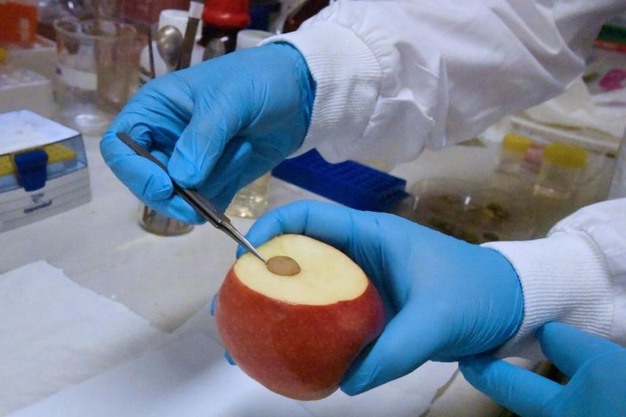
Dr Run Zhang from UQ's Australian Institute for Bioengineering and Nanotechnology (AIBN) said the probes can be added to food and juice samples or applied to paper testing strips. When touched to cut or intact produce, the strips change colour to reflect vitamin C concentration.
 © University of Queensland
Vitamin C, or ascorbic acid, is an antioxidant present in most fruits and vegetables. Its levels vary depending on post-harvest handling, including exposure to heat, oxygen, and light, as well as factors such as soil quality and pesticide use.
"Measuring vitamin C is therefore an essential step for producers, regulatory agencies, and consumers who want to simply evaluate food freshness and nutritional content," Zhang said.
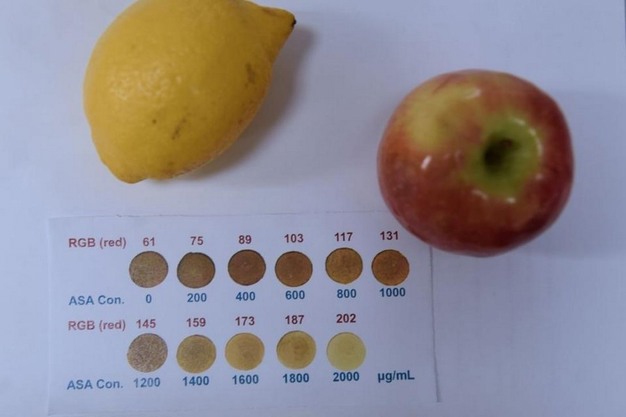
The probes consist of a metallic core coated with a fluorescent dye. When exposed to ascorbic acid, the coating breaks away, and the remaining material changes colour in proportion to the vitamin C present.
 © University of Queensland
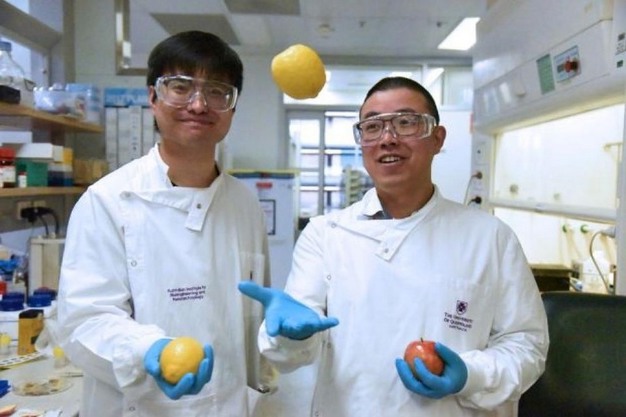
PhD scholar Dihua Tian said the probes shift from yellow to brown when exposed to different fruits, vegetables, and juices, giving a basic indication of freshness and nutrition. The probes can be applied to paper strips and pressed against whole or cut fruit.
The technology could also be paired with smartphone applications to provide a more precise reading of vitamin C levels. "Ultimately, this is technology that could be used in tandem with colour visualiser phone applications that can scan a testing strip coated in our nanoprobes and tell you exactly how fresh and healthy the food is," Tian said.
 © University of Queensland
Zhang noted that the probes may also have applications in agriculture. By testing plant leaves for vitamin C content, growers could gain information about plant nutrition, stress responses, and crop management.
"Ultimately, we would be supporting environmental sustainability, optimising nutrient management in crops," Zhang said.
For more information:
The University of Queensland
Tel: +61 (0) 7 3365 1130
Email: [email protected]
www.news.uq.edu.au